Germany’s Best Christmas Markets: Where to Go This Winter
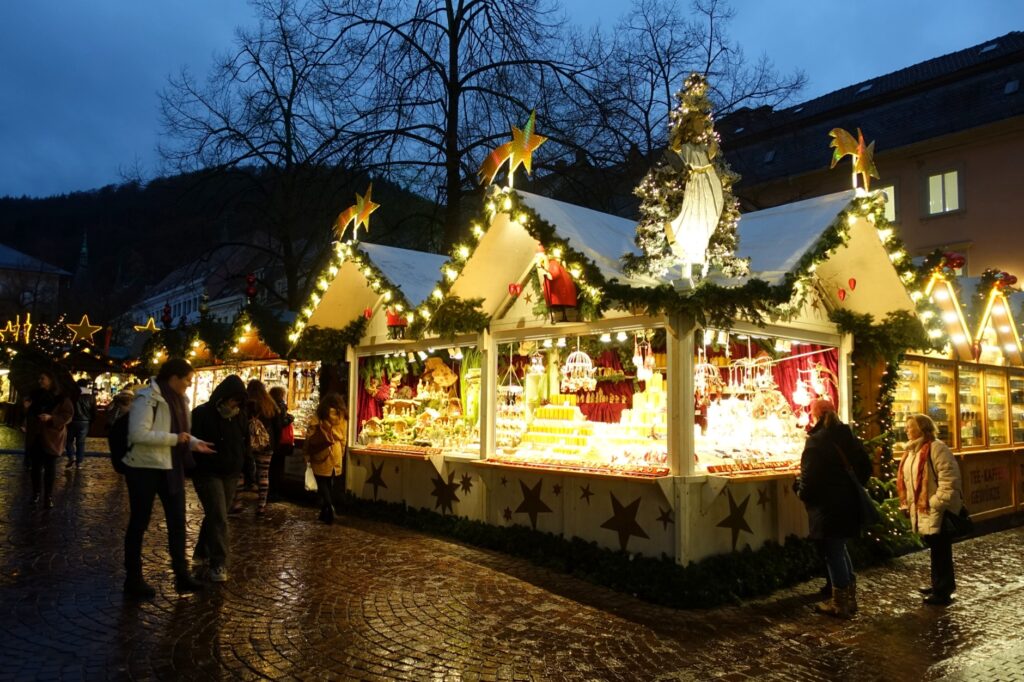
Germany Christmas markets are the reason so many of us fall in love with winter travel. Few things beat a mug of steaming Glühwein in a medieval square, the smell of roasted almonds and gingerbread in the air, and rows of wooden stalls glowing against the cold. Germany has more than 2,500 of these Weihnachtsmärkte, so the hard part isn’t finding one, it’s choosing which to visit.
In this guide we cover the five markets we think are worth planning a trip around in 2026: Nuremberg, Cologne, Dresden, Heidelberg and Rothenburg ob der Tauber. You’ll find what makes each one special, when they open, how to get between them and what to budget, so you can book early and get the most out of the season.
Why Germany Is the Home of Christmas Markets
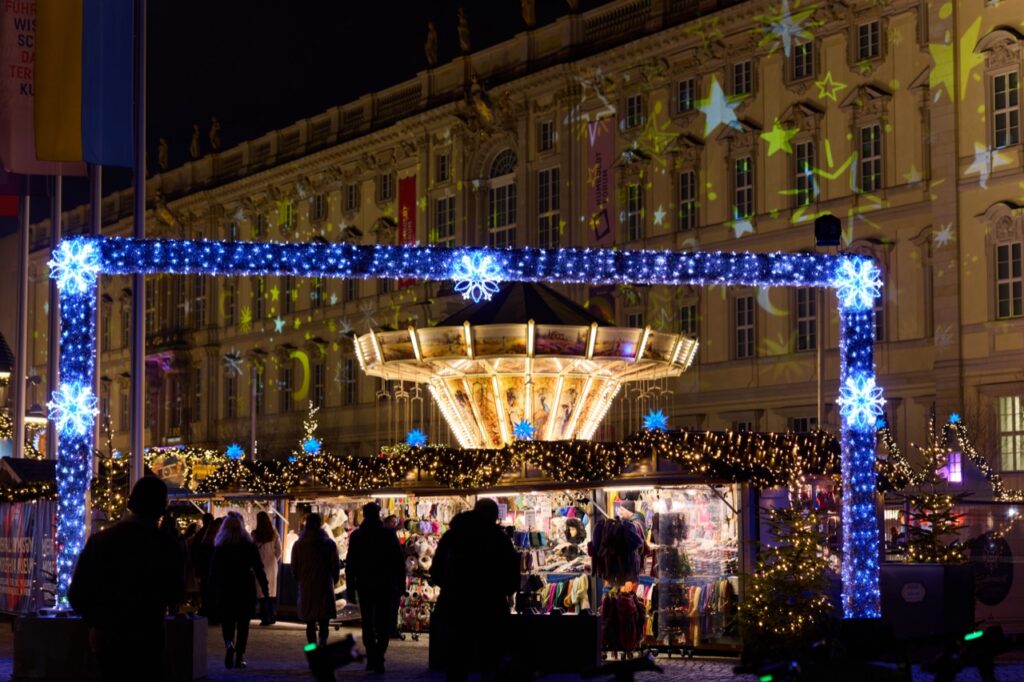
Germany didn’t just popularise the Christmas market, it created the tradition. Dresden’s Striezelmarkt is first recorded in 1434, and other cities have similar histories reaching back to the late Middle Ages. They began as practical winter markets where people stocked up on food and supplies before the coldest months, and slowly grew into the festive celebrations we know today.
What makes German markets different from the copies you’ll find across Europe is the sense of tradition. Stalls sell hand-carved wooden decorations, candle arches and nutcrackers from the Ore Mountains, regional sausages and seasonal bakes, and every city has its own speciality and its own collectable mug. Most markets are free to enter and open well into the evening, when the lights really come into their own.
The Best Christmas Markets in Germany for 2026
Nuremberg Christmas Market: Germany’s Most Famous
The Nuremberg Christmas Market, or Christkindlesmarkt, is the one most people picture when they think of a German Christmas market. Around 180 red-and-white-roofed stalls fill the Hauptmarkt in the old town, and the market is strict about what can be sold: expect handmade decorations, Zwetschgenmännle (little figures made from dried prunes) and the city’s famous Lebkuchen gingerbread rather than mass-produced souvenirs.
The market traditionally opens on the Friday before the first Sunday of Advent, which falls on 27 November in 2026, and runs until Christmas Eve. The opening is a highlight: the Nuremberg Christkind, dressed in gold and white, reads a prologue from the balcony of the Frauenkirche to open the market. Check the official city website for confirmed dates and times before you book.
Don’t miss:
- Drei im Weggla: three of Nuremberg’s small Rostbratwurst sausages in a bread roll.
- The children’s Christmas market on Hans-Sachs-Platz and the Market of the Sister Cities, with food and crafts from Nuremberg’s twin towns.
- A weekday evening visit. Opening weekend is magical but very busy.
Cologne Christmas Market: A Market for Every Mood
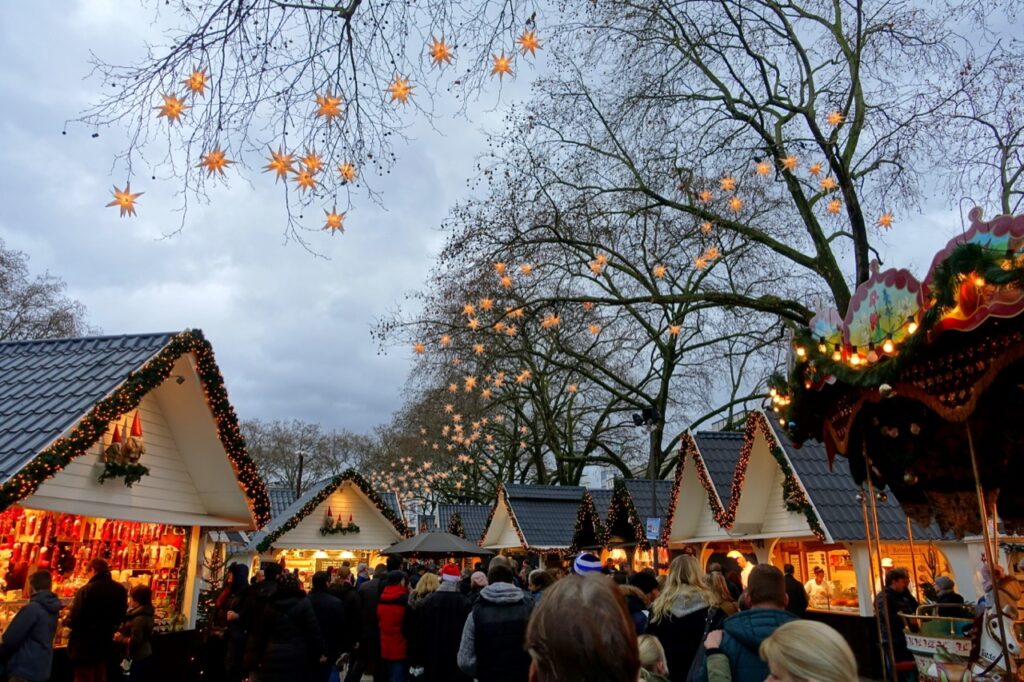
The Cologne Christmas Market is really a collection of markets spread across the city centre, each with its own style. The best known sits right beside Cologne Cathedral, where a sea of stalls glows beneath the twin Gothic spires. A short walk away, the Heinzel-themed market on the Alter Markt and Heumarkt has an ice rink and storybook décor, the Neumarkt’s Angels’ Market is famous for its star-lit trees, and the harbour market by the Chocolate Museum has views over the Rhine.
Cologne’s markets usually open in mid-to-late November and run until 23 December. Because they are so close together, it’s easy to walk between several in one evening.
Our tip: order a small glass of Kölsch, the local beer, between Glühwein stops, and pick up a map of the market trail from the tourist office opposite the cathedral.
Hidden Gems: More Germany Christmas Markets Worth the Trip
Nuremberg and Cologne get most of the attention, but some of our favourite markets are in smaller, quieter settings.
Dresden Striezelmarkt
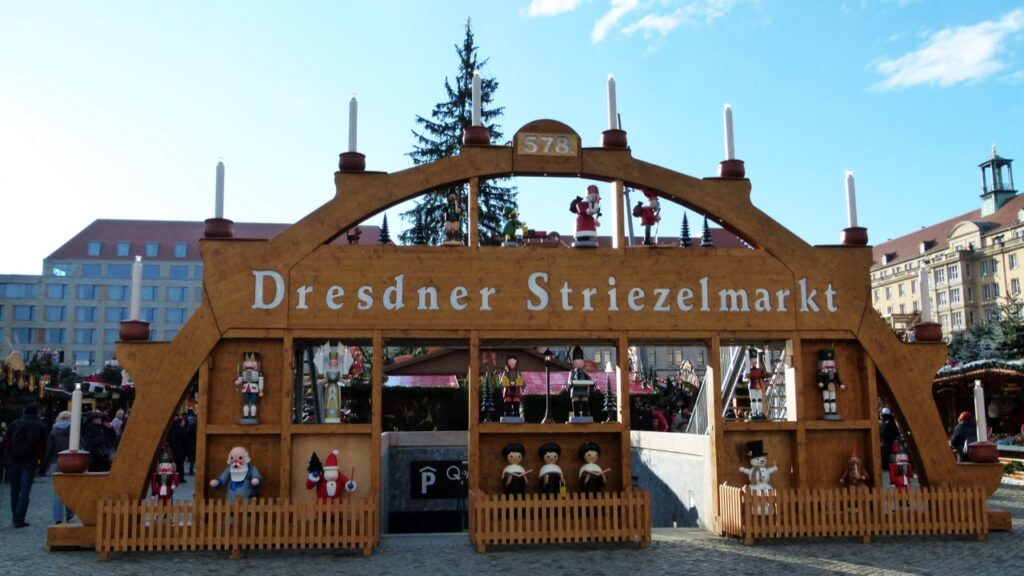
First held in 1434, the Striezelmarkt on Dresden’s Altmarkt is one of Germany’s oldest Christmas markets, and it still feels wonderfully authentic. Look out for the giant wooden candle arch at the entrance, the towering Christmas pyramid, and stalls selling hand-carved nutcrackers and incense smokers from the nearby Ore Mountains. The market takes its name from Striezel, the old word for Dresden’s famous Stollen fruit bread, so buy a slice (or a whole loaf to take home).
Heidelberg Christmas Market
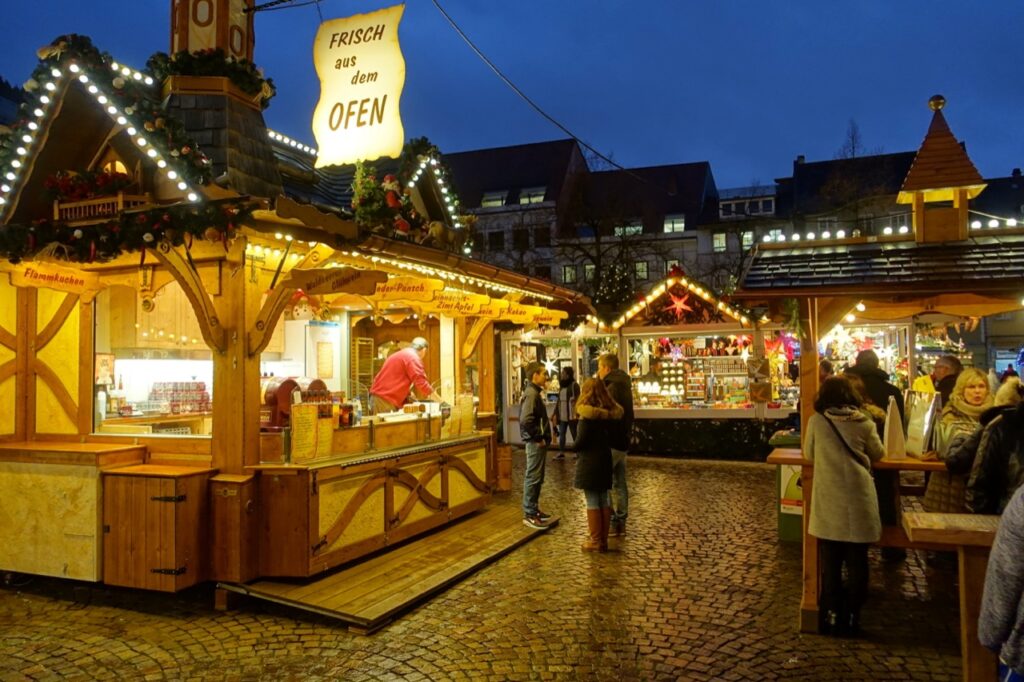
Heidelberg’s market spreads across several squares in the old town, and the ruined castle lit up on the hillside above makes it one of the prettiest settings in the country. The Kornmarkt has the classic view up to the castle, and there’s an ice rink on the Karlsplatz. It’s compact, easy to explore on foot and a good add-on if you’re flying into Frankfurt.
Rothenburg ob der Tauber
If you want a Christmas market that looks like it came straight off a card, head to Rothenburg ob der Tauber. The Reiterlesmarkt fills the market square of this walled medieval town, surrounded by half-timbered houses. Rothenburg is also home to Käthe Wohlfahrt’s Christmas Village shop, which sells decorations all year round. The town is small and gets busy at weekends, so go on a weekday or stay overnight to enjoy it after the day-trippers have left.
Planning Your Germany Christmas Markets Trip
When to Go
Most markets open in the second half of November and close on 23 or 24 December. In many German states, markets don’t open until after Totensonntag, the Sunday of remembrance before Advent (22 November in 2026). The first two weeks of December are a sweet spot: every market is open, but the pre-Christmas rush hasn’t started. Weekday evenings are far less crowded than Saturdays.
Getting Around
Germany’s rail network makes market-hopping easy. High-speed ICE trains link Cologne, Frankfurt, Nuremberg and Dresden, and visitors who live outside Germany can use the German Rail Pass for flexible travel. For short hops, such as Nuremberg to Rothenburg, regional trains are cheap and frequent. Download the DB Navigator app for timetables and tickets; it’s one of our best travel apps for planning a trip.
What to Budget
Entry to almost every market is free. As a rough guide, allow €40–€70 a day for food, drinks and small treats, and more if you plan to buy handmade gifts. Hotels in the big market cities fill up fast in December, and prices rise accordingly, so book as early as you can. It’s worth comparing Nuremberg hotel prices across booking sites now, especially for opening weekend.
Practical Tips
- Mug deposits: Glühwein comes in a ceramic mug with a deposit (Pfand) of a few euros. Return it for your money back, or keep it as a souvenir.
- Carry cash: many stalls now take cards, but plenty of smaller ones are still cash only.
- Dress for the cold: you’ll be standing outside for hours, so wear warm layers, a hat and comfortable waterproof shoes.
- Try the non-alcoholic options: Kinderpunsch (hot fruit punch) is great for children and drivers.
- Get travel insurance: winter weather can disrupt flights and trains, so check our guide to whether you need travel insurance before you go.
Final Thoughts: The Magic of German Christmas Markets
Standing in a German market square with a warm mug in your hands, the smell of cinnamon and roasted chestnuts in the air and carols echoing off centuries-old buildings, it’s easy to see why these markets draw visitors from all over the world. Whether you go for the tradition of Nuremberg, the variety of Cologne or the fairy-tale settings of Dresden, Heidelberg and Rothenburg, Germany’s Christmas markets are among the best winter trips in Europe.
Our advice is simple: pick two or three markets that are easy to link by train, book your hotel early, and leave room in your suitcase for a few decorations.
Where next? Keep the winter magic going with our guide to seeing the Northern Lights in Norway or our Swedish Lapland travel guide, or find more city breaks in our Berlin travel guide and our round-up of underrated European cities.