Chasing the Aurora in Norway: Where to Go and How to See It
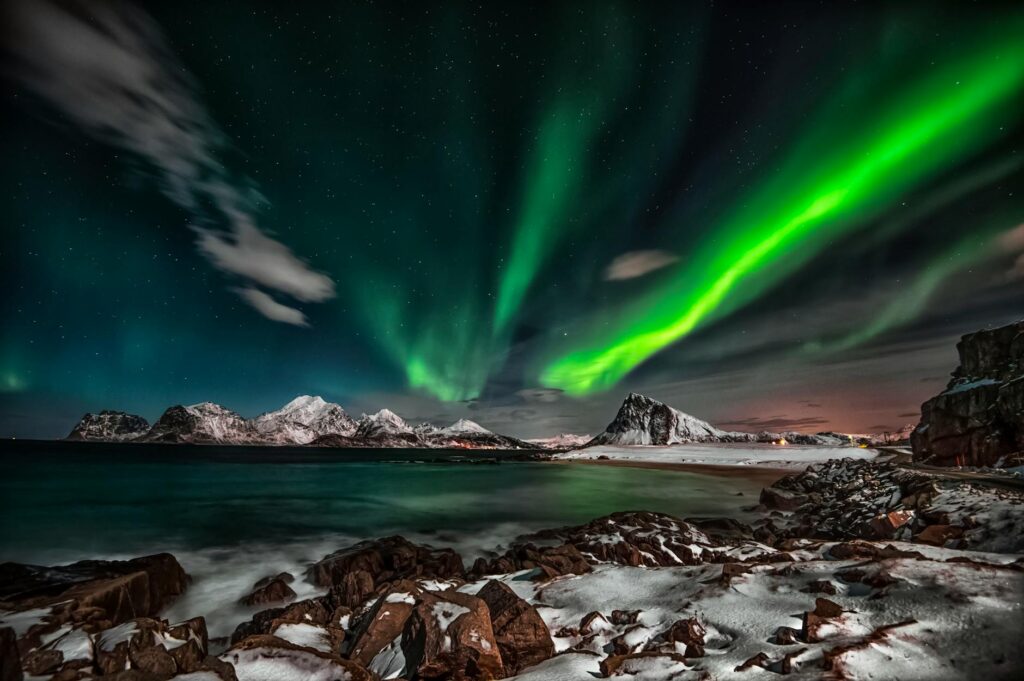
Northern lights Norway guide searches have surged in recent years, and it’s no surprise why. Few natural phenomena on Earth can rival the raw beauty of the aurora borealis dancing across a pitch-black Arctic sky. Ribbons of green, purple and pink light twist and shimmer above snow-capped mountains and frozen fjords, creating a spectacle that feels almost otherworldly. With so much of the country inside the Arctic Circle, Norway is one of the best places on the planet to see it.
Whether you’re a seasoned traveller or planning your first winter trip, this guide covers where to base yourself for the best chance of a sighting and the practical tips that make a Norway winter trip work.
Northern Lights Norway Guide: Why Norway Is the Ultimate Aurora Destination
Northern Norway sits beneath the “auroral oval”, the ring-shaped zone around the Earth’s magnetic poles where auroral activity is most intense and frequent. From late September to late March, its long, dark nights give you hours of viewing time every evening; all you need on top is a clear sky.
Beyond the science, Norway offers something many other Arctic destinations can’t match: excellent infrastructure. You don’t have to sacrifice comfort to chase the lights. Good accommodation, guided tours, reliable transport links and a well-developed tourism industry make it accessible even for first-time Arctic travellers.
Best Places to See Northern Lights in Norway
Tromsø: The Aurora Capital of the World
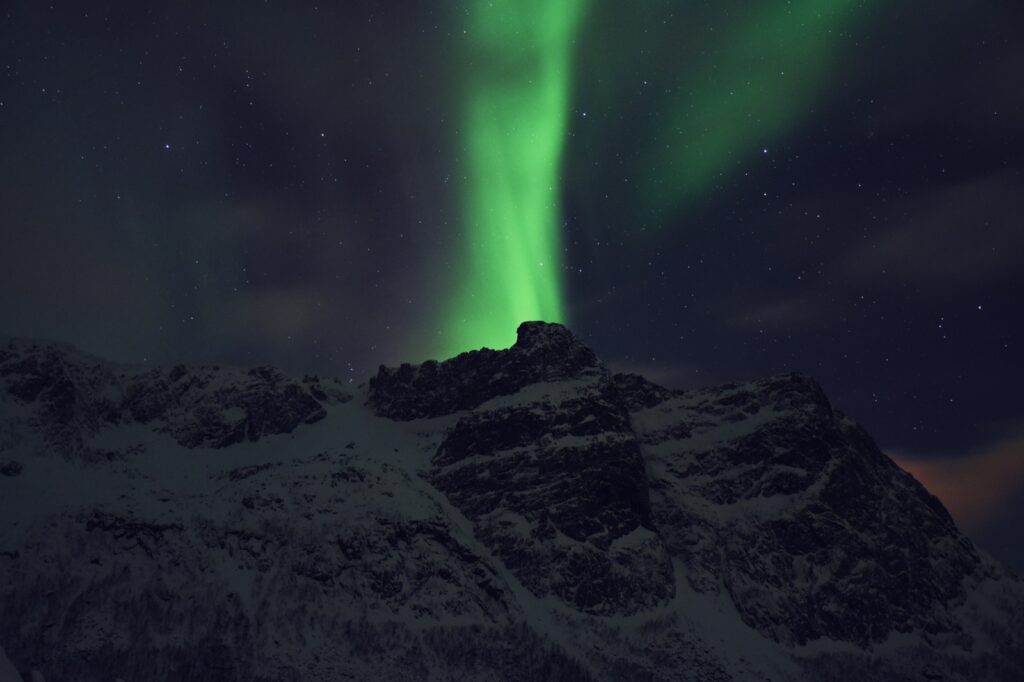
When people think about the best places to see northern lights Norway has to offer, Tromsø aurora borealis trips almost always top the list. Roughly 350 kilometres north of the Arctic Circle, Tromsø is the largest city in Northern Norway and arguably the most popular base for aurora hunting in the world.
Tromsø offers the perfect balance of accessibility and Arctic wilderness. On a strong night you can see the aurora from the city itself, but head a short distance away from the street lights and the sky opens up dramatically. Popular viewing areas include Kvaløya island (with spots such as Ersfjordbotn) and the Lyngen Alps.
The city also has an extraordinary range of guided aurora tours, from snowmobile expeditions into the wilderness to cosy minibus trips that chase clear skies across the region. Even when cloud covers the city, experienced local guides know where to drive to find clear patches, sometimes as far as the Finnish border.
Beyond aurora chasing, Tromsø is a lively Arctic city with excellent restaurants and museums. Visit the striking Arctic Cathedral, try local reindeer dishes, or ride the Fjellheisen cable car up to Storsteinen for panoramic views of the city and surrounding fjords.
Svalbard: Midnight Sun’s Dark Counterpart
For the most extreme aurora experience imaginable, the Svalbard archipelago, halfway between mainland Norway and the North Pole, delivers like nowhere else. During the polar night, from late October to mid-February, the sun doesn’t rise at all, and in the darkest weeks around midwinter it’s dark around the clock, so the aurora can appear at almost any hour.
Longyearbyen, Svalbard’s main settlement, is the base for most visitors. From here you can join guided snowmobile trips, dog-sledding adventures or snowshoe hikes designed around aurora hunting. Glaciers, ice caves and open tundra add an extra dimension to the light show.
Be aware that Svalbard needs more preparation and a bigger budget than mainland Norway, but the payoff is extraordinary.
The Lofoten Islands: Aurora Over Dramatic Scenery
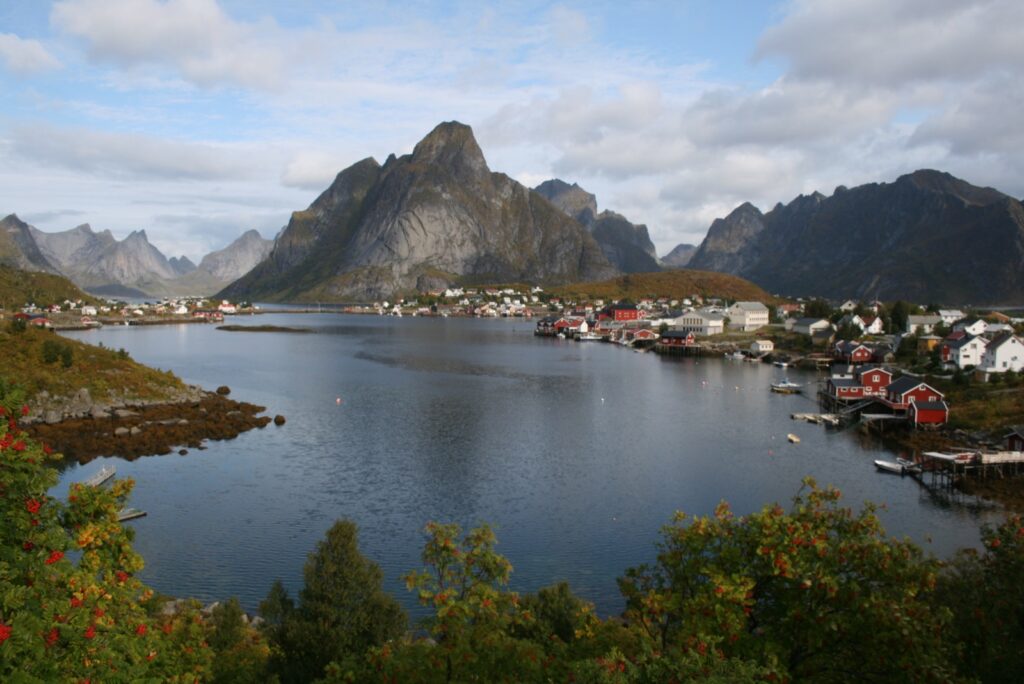
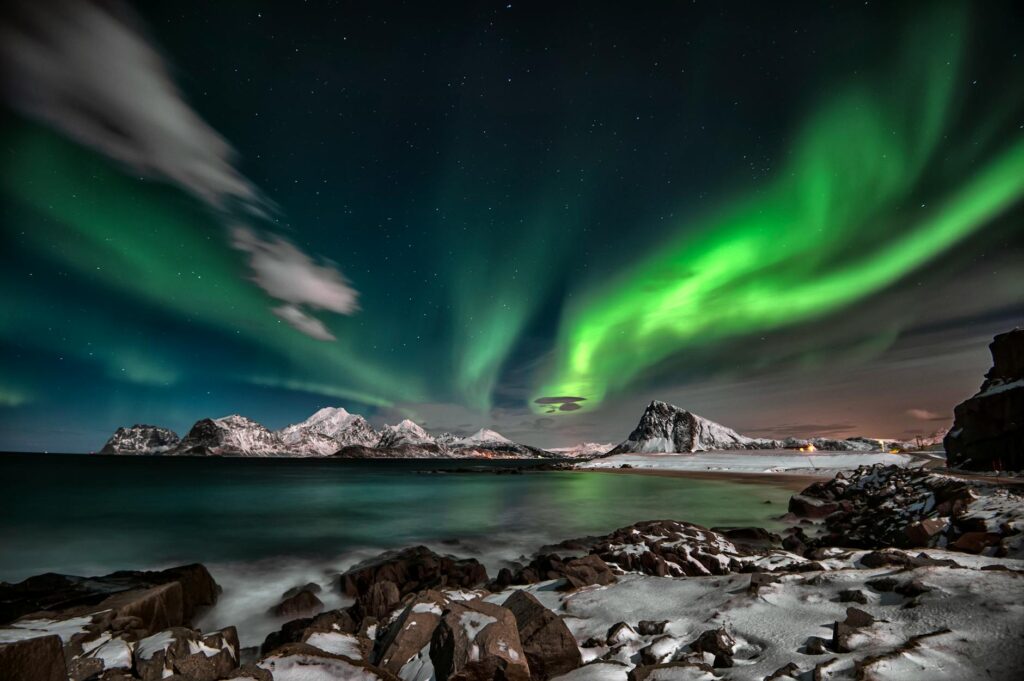
The Lofoten Islands offer what many photographers consider the most beautiful backdrop for the northern lights anywhere in the world. Dramatic peaks plunge straight into dark water, traditional red and yellow fishermen’s cabins (rorbuer) line the shores, and the whole landscape feels like something from a fairy tale.
The islands lie north of the Arctic Circle and see frequent aurora activity through the winter. Because Lofoten is popular year-round, it has plenty of places to stay, including the chance to sleep in one of those fishing cabins right on the waterfront and, with luck, watch the aurora reflected in the still water from your window. It’s worth comparing Lofoten hotel prices across booking sites before you book, since the best fishing-cabin stays fill up early.
Good bases for aurora viewing include Reine, Henningsvær and the old fishing village of Nusfjord, all of which also offer great hiking and culture during the short daylight hours.
Alta: The Northern Lights City
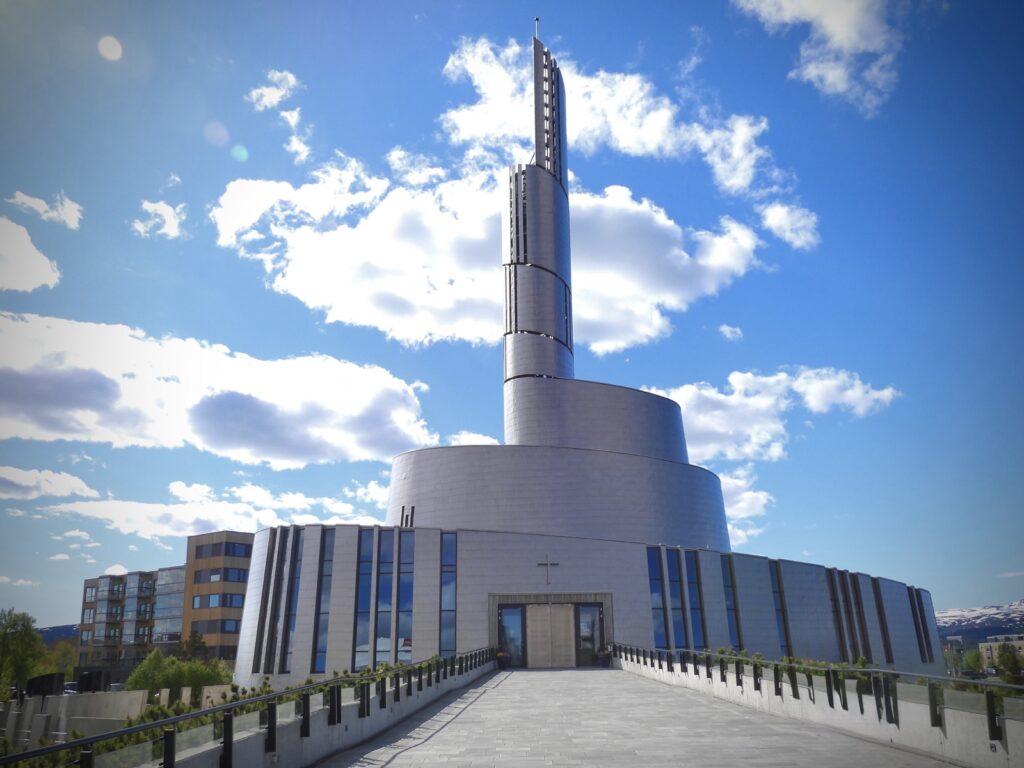
Alta, in Finnmark in far northern Norway, has a long connection with the aurora borealis. The town is home to the Northern Lights Cathedral, a striking spiral-shaped church designed to echo the phenomenon, and on Haldde mountain nearby stood the world’s first northern lights observatory, built in 1899. Alta is also close to the prehistoric rock carvings at Hjemmeluft, a UNESCO World Heritage Site.
Alta’s position deep within the auroral zone makes it an excellent, slightly less touristy alternative to Tromsø. The surrounding wilderness offers dark skies for viewing, and the town has a well-developed set of winter activities built around the aurora.
Watch: Tromsø, Lofoten and Alta in 20 seconds. Subscribe to our YouTube channel for a new travel Short every week.
Essential Tips for Norway Winter Travel
Making the most of your Norway winter travel takes some planning. Here’s what experienced aurora chasers recommend:
- Timing is everything. The aurora season runs from late September to late March. December to February has the longest nights; September, October and March are milder and often just as active.
- Watch the cloud forecast. Use an aurora forecast app for activity, but check cloud cover on yr.no (the Norwegian Meteorological Institute’s forecast). Cloud is your biggest enemy, so stay flexible and be ready to move.
- Dress in layers. Arctic temperatures can drop far below freezing. Pack thermal base layers, an insulating mid-layer and a windproof outer shell. Waterproof boots and warm gloves are essential.
- Book a guided tour. Local guides read the weather for a living and know the best spots away from the crowds. They can significantly improve your chances of a sighting.
- Get away from light pollution. Even a few kilometres outside a city centre makes a big difference. Most tour operators drive you to dark-sky areas automatically.
- Be patient. The aurora doesn’t perform on a schedule. Some nights are spectacular; others yield nothing. Book at least three or four nights and enjoy the journey.
Camera Tips for Capturing the Aurora
Photographing the northern lights is a goal for many visitors. Use a camera with manual settings, a wide-angle lens with a large aperture (f/2.8 or lower) and a sturdy tripod. Set your ISO between 800 and 3200 and experiment with shutter speeds between 5 and 25 seconds, depending on how active the display is. Most recent smartphones also have a night mode that does surprisingly well on a tripod. Bring spare batteries, as the cold drains them quickly.
Final Thoughts
Norway offers everything an aurora hunter could want: prime geography, stunning landscapes, excellent infrastructure and a deep cultural connection with the Arctic winter. Whether you choose the energy of Tromsø, the extreme wilderness of Svalbard, the dramatic scenery of the Lofoten Islands or the quieter charm of Alta, you’ll be in one of the best places on Earth to see nature’s greatest light show.
Start planning early, stay flexible and prepare for the experience of a lifetime.
Where next? Keep planning with what to see in Oslo, compare the aurora across the border in Swedish Lapland, or pair your winter trip with Germany’s Christmas markets.