Marrakech Guide: Souks, Palaces, Gardens and the Best Day Trips
This Marrakech travel guide is for anyone planning a trip to Morocco’s Red City. Few places hit your senses quite like Marrakech (or Marrakesh): the call to prayer drifting over pink-walled lanes, the smell of spices and grilled meat in the souks, and the buzz of Jemaa el-Fnaa as the sun goes down. It’s only a three-and-a-half-hour flight from the UK, but it feels like a different world.
Below we cover the top sights in Marrakech, the best things to do beyond them, practical tips for visiting the medina, and the best day trips into the desert, the mountains and out to the coast.
Why Visit Marrakech?
Marrakech has been a crossroads of trade and culture for nearly a thousand years. Founded in the 11th century by the Almoravids, its walled medina is a UNESCO World Heritage Site, packed with palaces, madrasas, gardens and hundreds of tiny workshops where craftspeople still carve wood, hammer brass and dye leather by hand.
It’s also a brilliant base. Within an hour or two you can be walking in the Atlas Mountains or watching the sunset over the stony Agafay Desert, and the rest of Morocco is well connected by train and road. The medina’s historic monuments reopened soon after the September 2023 earthquake, which hit rural mountain villages hardest, and the city is fully open to visitors.
Top Sights in Marrakech
Jemaa el-Fnaa
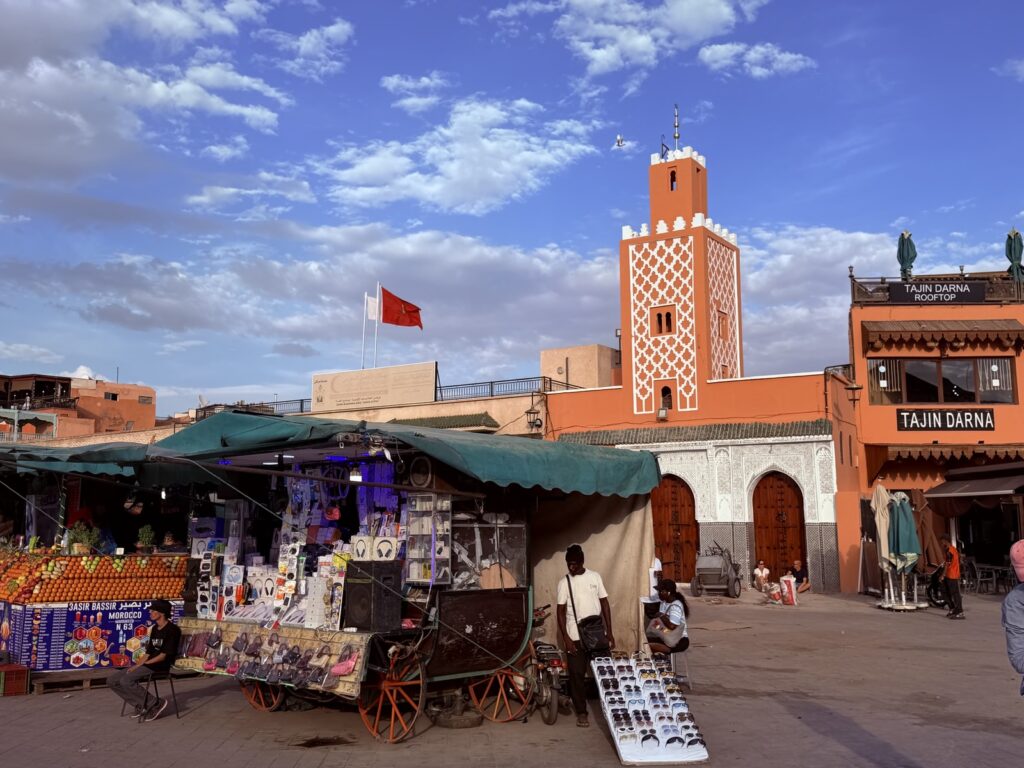
The beating heart of the medina, Jemaa el-Fnaa changes character through the day. In the morning it’s fresh orange-juice stalls and snake charmers; by late afternoon, storytellers, musicians and henna artists arrive; and after dark, dozens of food stalls fire up their grills. Watch from a rooftop café at sunset, then dive in.
Good to know: performers expect a tip if you take their photo, so agree a price first or keep your camera down, and be firm but polite with anyone offering to “show you the way”.
Koutoubia Mosque
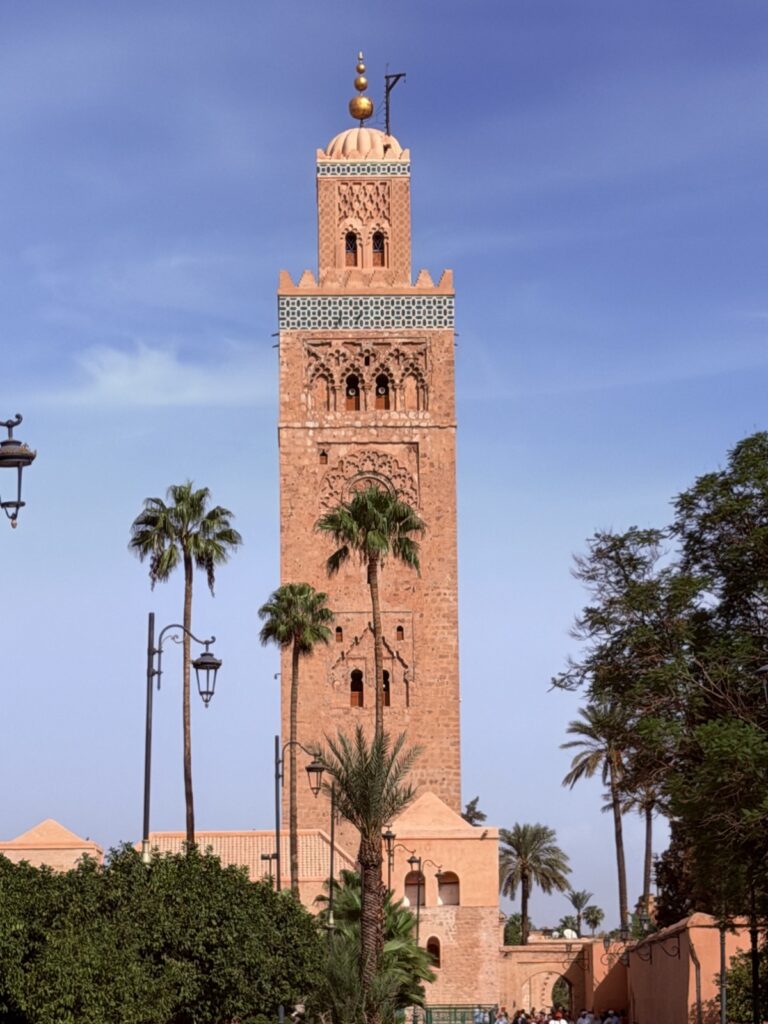
The 77-metre minaret of the Koutoubia Mosque, built in the 12th century, is the city’s great landmark and a handy compass point when you’re lost in the medina. Only Muslims can go inside, but the gardens around it are lovely in the early evening, when the tower glows in the setting sun.
Bahia Palace
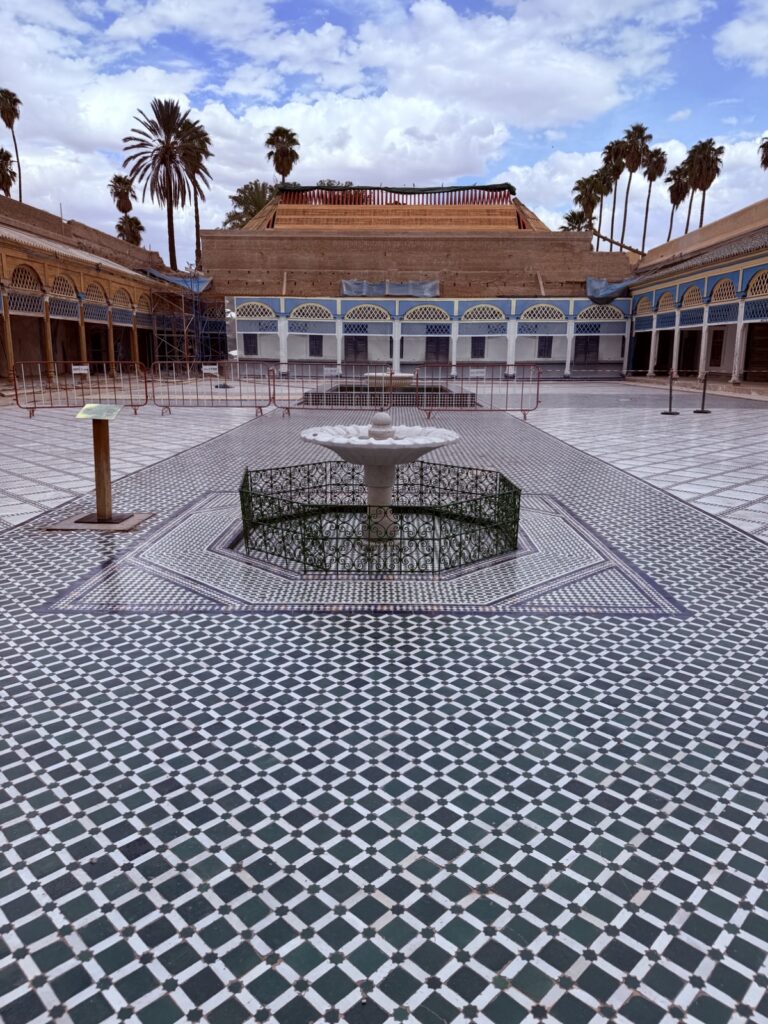
Built in the late 19th century for the grand vizier of the day, the Bahia Palace is a maze of courtyards, gardens and rooms decorated with painted cedar ceilings, carved stucco and zellige tilework. Entry is 100 MAD, and it’s open daily from 9am to 5pm. Go at opening time to see it before the tour groups arrive.
Our experience: we booked through GetYourGuide and paid £50.68 for the four of us (about £12.67 each). That covered entry and an audio guide you download to your phone and listen to as you walk round. Be aware that a lot of the palace was closed to the public for ongoing maintenance work when we visited in October 2026, so you may not see every room.
El Badi Palace and the Saadian Tombs
A short walk from the Bahia, the ruined El Badi Palace was once one of the most lavish palaces in the Islamic world. Today it’s a vast, atmospheric shell of sunken gardens and high walls, with storks nesting on top and great views from the ramparts. Nearby, the Saadian Tombs, rediscovered in 1917, hold the richly decorated graves of the 16th-century Saadian sultans. The tombs are small and get busy, so go early.
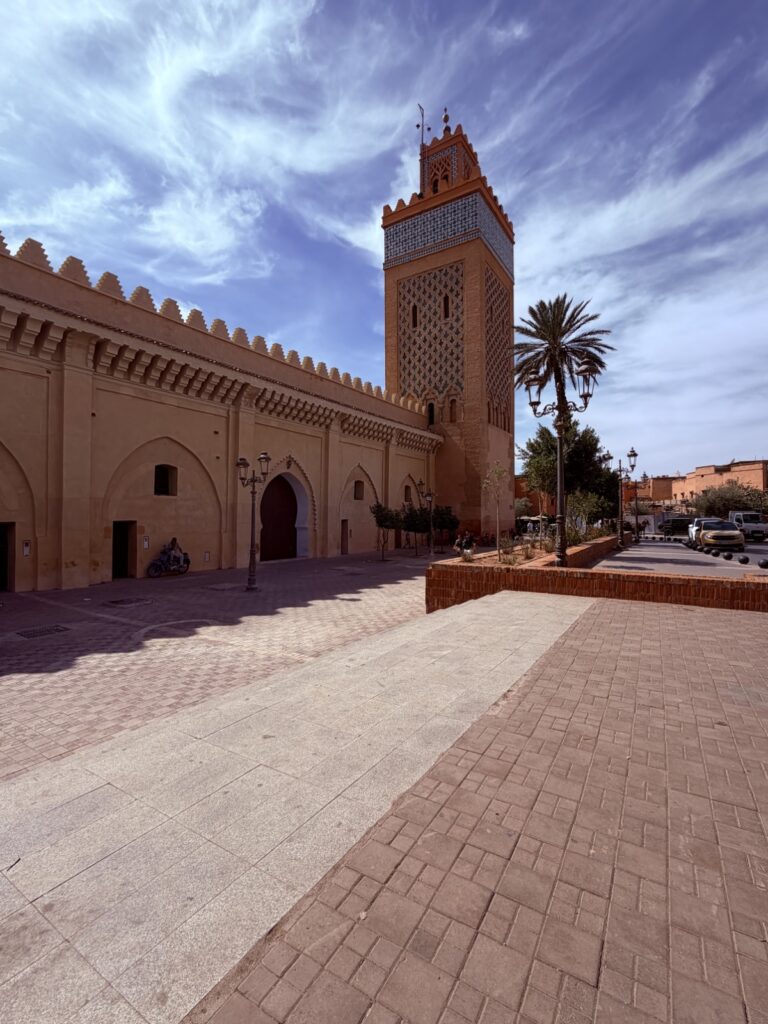
Our experience: the Saadian Tombs were closed when we visited in October 2026, so check they’re open before you go. The minaret of the neighbouring Kasbah Mosque is still worth a look while you’re there.
Ben Youssef Madrasa
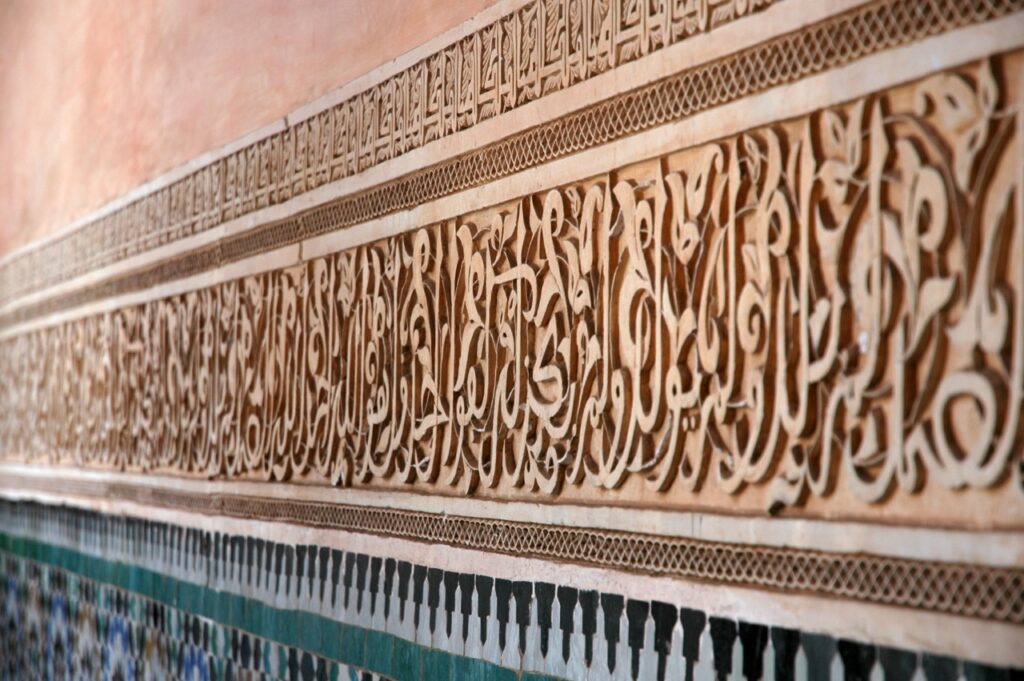
Once one of the largest Islamic colleges in North Africa, the Ben Youssef Madrasa is, for many visitors, the most beautiful building in Marrakech. Its central courtyard, with a long reflecting pool framed by carved cedar, stucco and tiles, is breathtaking, and you can peek into the tiny student rooms upstairs. It’s open daily from 9am to 7pm, and entry is 50 MAD.
Jardin Majorelle and the YSL Museum
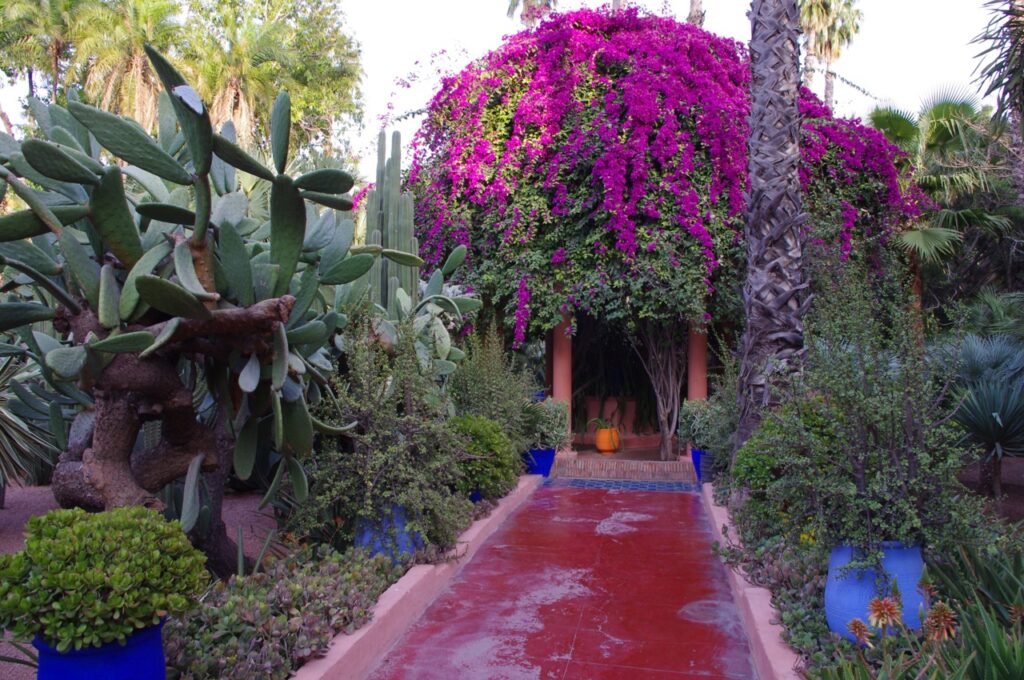
Created by the French painter Jacques Majorelle and later restored by Yves Saint Laurent and Pierre Bergé, the Jardin Majorelle is a calm oasis of cacti, palms and bamboo around a villa painted in the famous cobalt “Majorelle blue”. Next door, the Musée Yves Saint Laurent celebrates the designer’s love of Morocco.
Book ahead: tickets are sold only online, on the official Jardin Majorelle website, for a set time slot, and there’s no ticket office on site. The YSL Museum is closed on Wednesdays, so plan around that if you want to see both.
Le Jardin Secret and Maison de la Photographie
Hidden in the medina, Le Jardin Secret is a restored riad garden with Islamic and exotic sections and a tower with views over the rooftops. It’s a peaceful escape from the souks. Nearby, the Maison de la Photographie has a fascinating collection of old photos of Morocco and a lovely rooftop terrace for mint tea.
Dar el Bacha and Bacha Coffee
In the north-west of the medina, Dar el Bacha (“the Pasha’s House”) is an early 20th-century palace built for Thami El Glaoui, the Pasha of Marrakech, with carved cedar doors, intricate zellige tilework and a garden courtyard with a marble fountain. Today it houses the Musée des Confluences and Bacha Coffee, a grand, old-world café serving coffees from around the world.
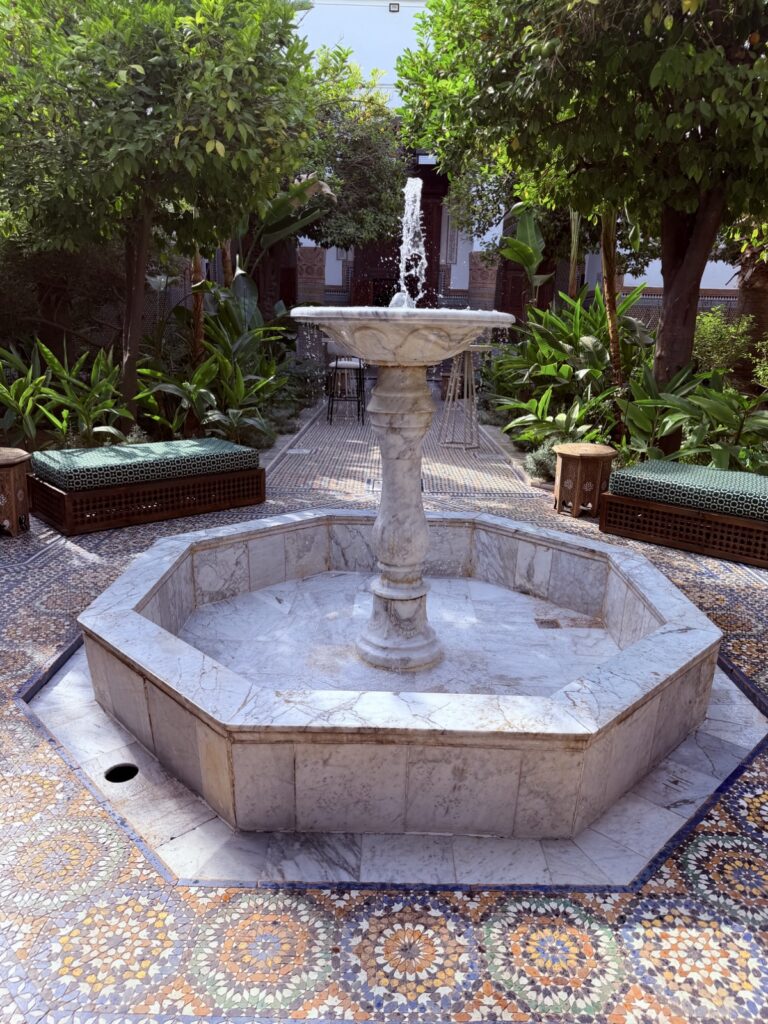
Our experience: we took an Uber from our hotel and paid 15 MAD each to get in. The museum itself was closed during our visit because of a local air show event, so we came for the coffee. We were told the wait could be up to an hour; in the end it was around 45 minutes. Once seated, you’re given two menus: one listing coffees from around the world, and one for food. We chose the coffee and cake pairing, which comes with a coffee of your choice and two large slices of cake from the cake menu, and we picked two different cakes. Afterwards we went into the shop and bought a tasting selection of coffees from around the world to take home. If you’re a coffee lover, it’s definitely worth it, and we’d happily go back.
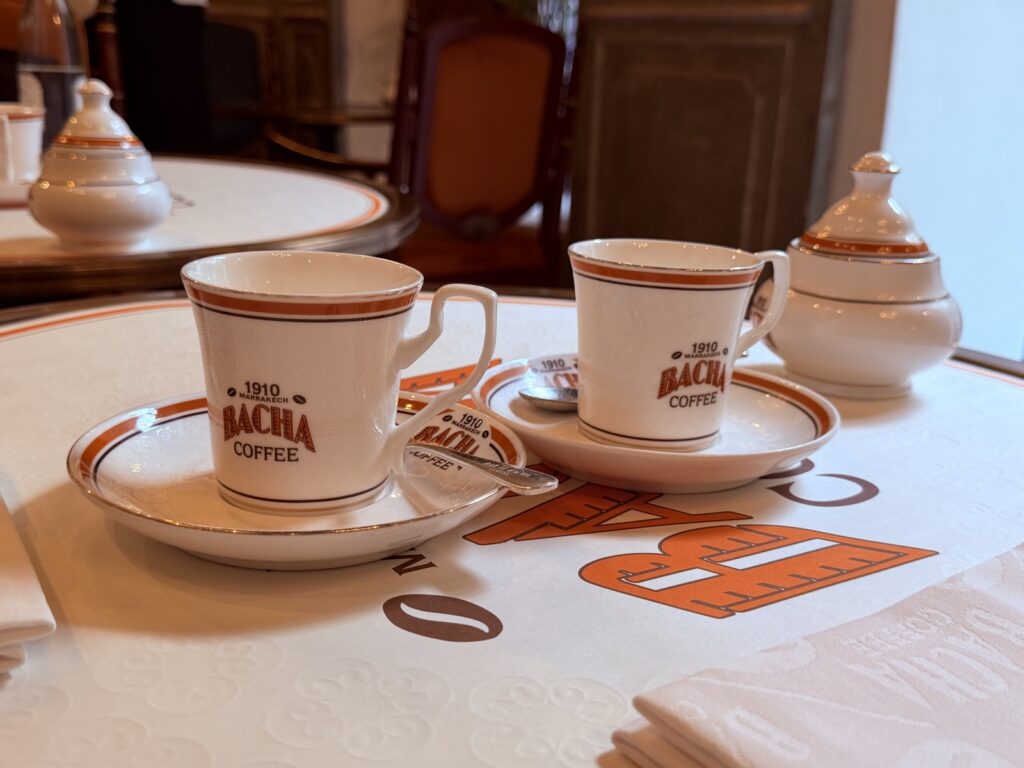
Don’t miss: there’s usually a queue for the café, so allow up to an hour, and save room for the cake.
Things to Do in Marrakech
Get Lost in the Souks
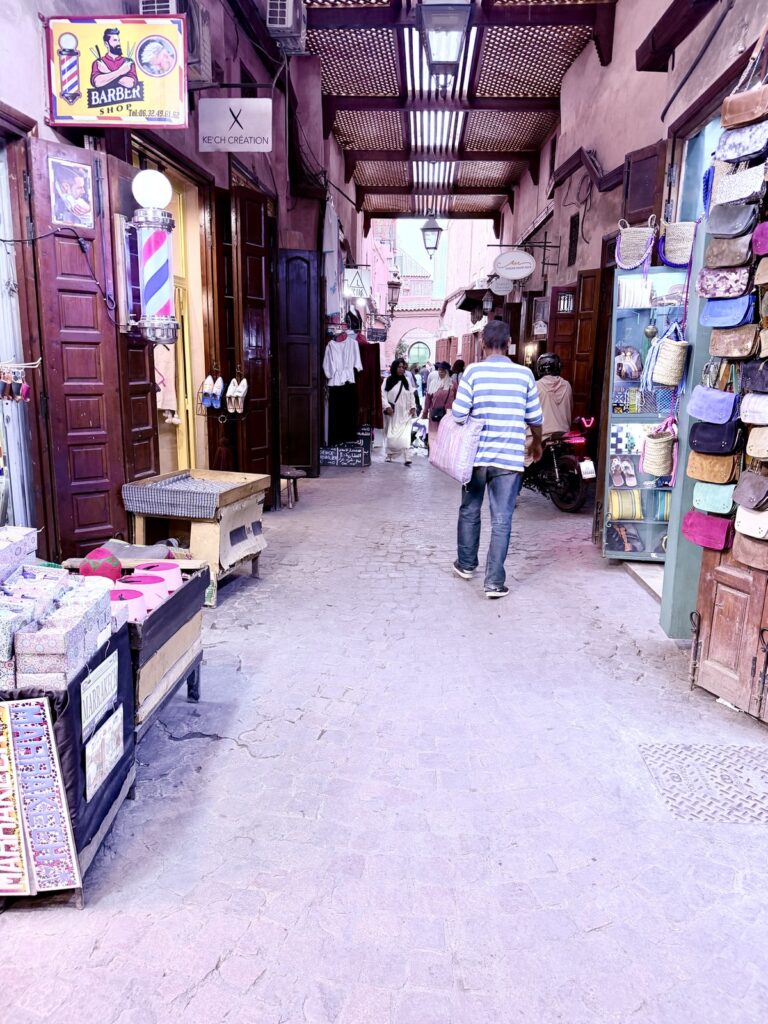
North of Jemaa el-Fnaa, the covered souks are a tangle of lanes selling everything from leather slippers and lanterns to spices, rugs and ceramics. Each area traditionally has its own trade, so you’ll wander from the dyers’ souk, hung with skeins of coloured wool, to the metalworkers hammering away in their workshops.
Haggling tips: in the souks and markets you need to haggle hard, because the first price you’re quoted will almost always be too high. As a rule of thumb, start at less than half of what you’re told, stand your ground for as long as you can, and be ready to walk away: as soon as the seller thinks you’re leaving, the price usually drops dramatically. Stay friendly, and only start bargaining if you’re genuinely interested in buying.
Our experience: one stall wanted 1 MAD a gram for loose mint tea, which is expensive. At another stall in the souk we settled on 80 MAD for 100 grams of much better-quality tea. When we tried to buy five gemstone necklaces, the first price was 500 MAD; we said no, went back another day and settled at 250 MAD, half the original price.
Relax in a Hammam
A traditional hammam is one of the best things to do in Marrakech. You can choose a simple local public hammam for an authentic (and very cheap) scrub, or a spa hammam for a more luxurious experience with a black-soap scrub and massage.
Our experience: we booked a hammam and massage package at our hotel spa. The hammam was definitely worth it; the massage, in our experience, could have been better.
Take a Cooking Class
Learn to make tagine, couscous and Moroccan salads at a cooking school, many of which start with a guided trip to the market for ingredients. It’s a great way to understand Moroccan food and bring a little of the trip home.
Vegetarian or vegan? Moroccan cooking adapts easily, and some schools run classes for vegetarians and vegans, with dishes like vegetable tagine, couscous with vegetables and smoky aubergine zaalouk.
Watch the Sunset from a Rooftop
Marrakech is a city of rooftop terraces. Head up at golden hour for mint tea or dinner, and watch the light turn the city pink as the call to prayer echoes from minaret to minaret.
Where We Ate and Drank
Away from our hotel, these were our three favourite places to eat and drink in the city, and we’d happily recommend all of them.
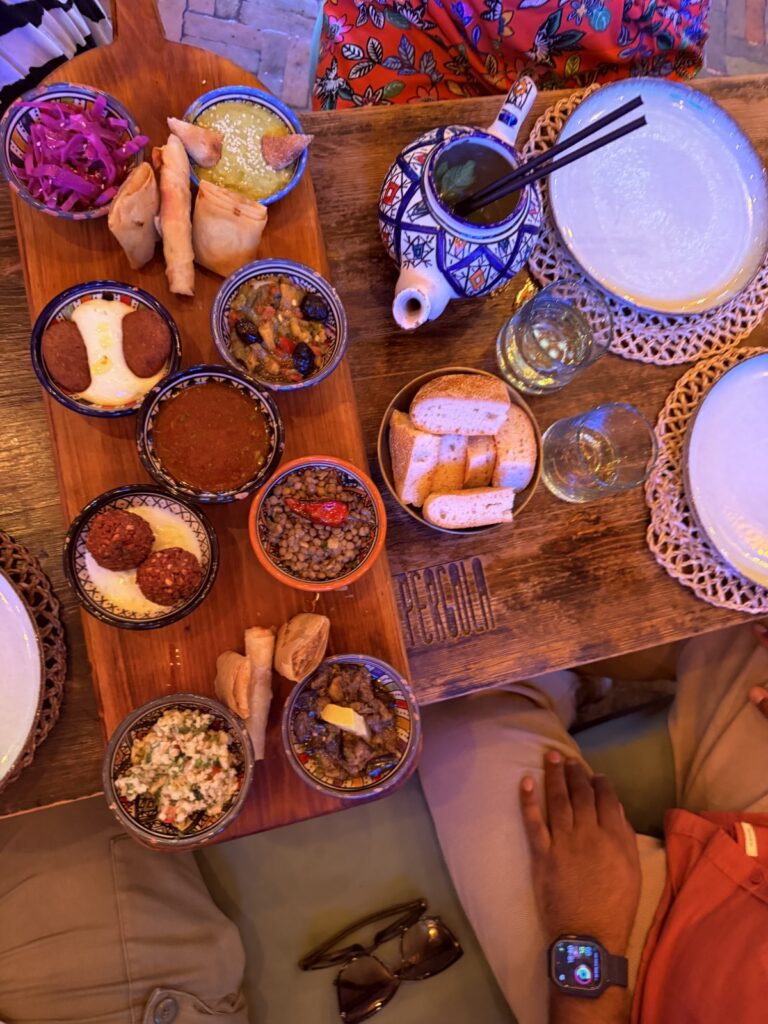
- La Pergola: a rooftop jazz bar on top of Riad Monceau, a few minutes’ walk from Jemaa el-Fnaa. It was a lovely experience, with great live music and a lively atmosphere. Drinks were reasonably priced, and the mezze board was perfect for snacking.
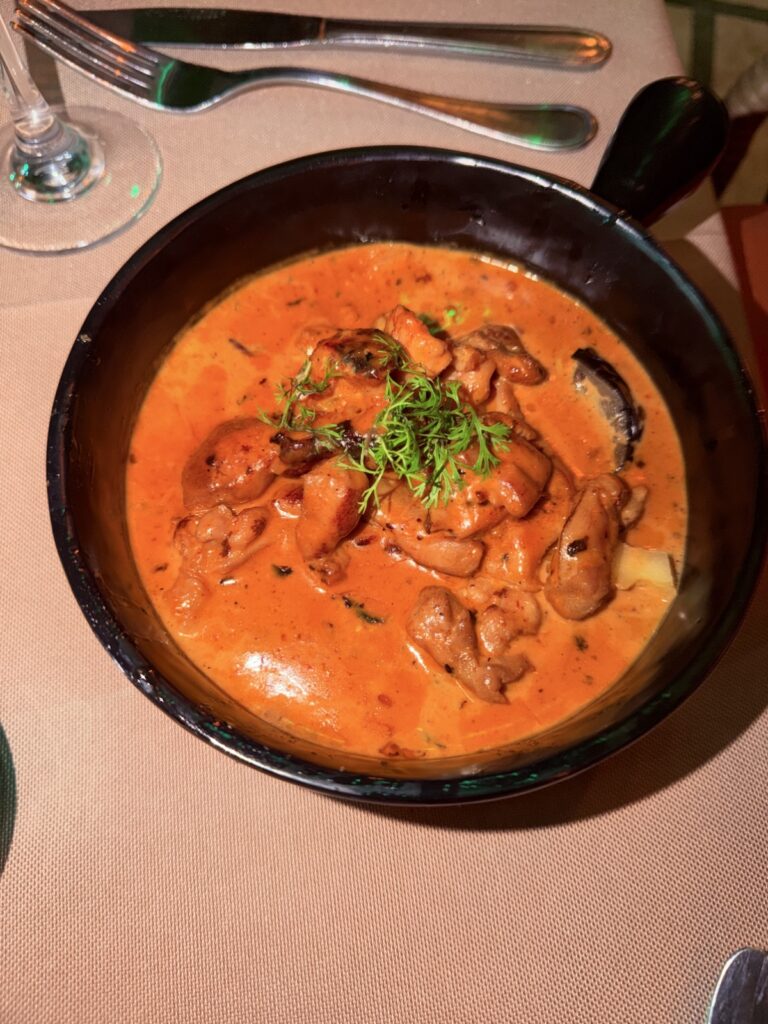
- Nouba: a dinner show in the Agdal district, south of the medina, with live acrobatics that were highly entertaining. We had the Asian tasting menu during the show, and the food was out of this world. Definitely one to book.
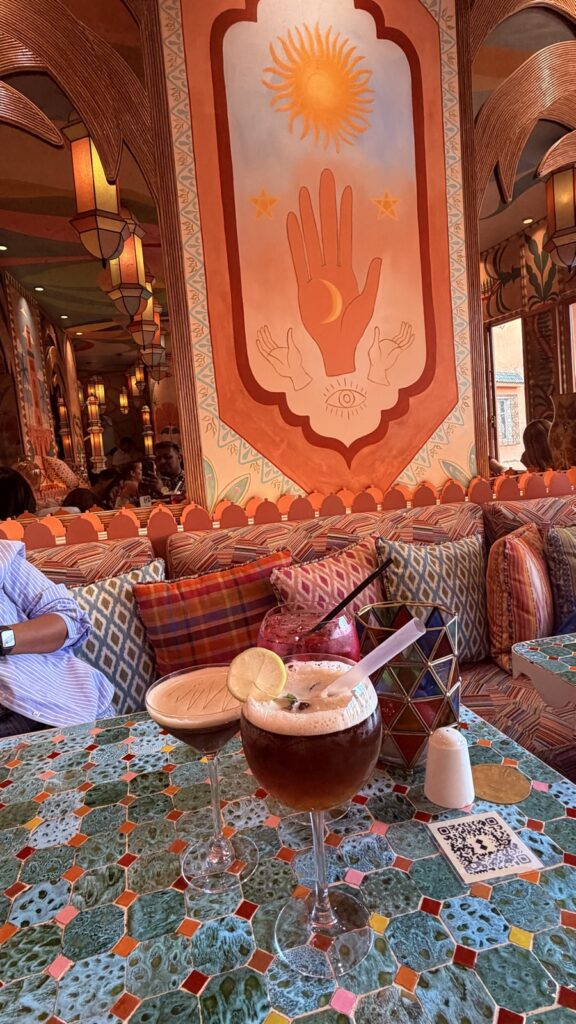
- MÖ-MÖ: a colourful rooftop above Jemaa el-Fnaa, with hand-of-Fatima murals on the walls. We stopped here for drinks on our last day, in between shopping in the souks and the square.
Day Trips from Marrakech
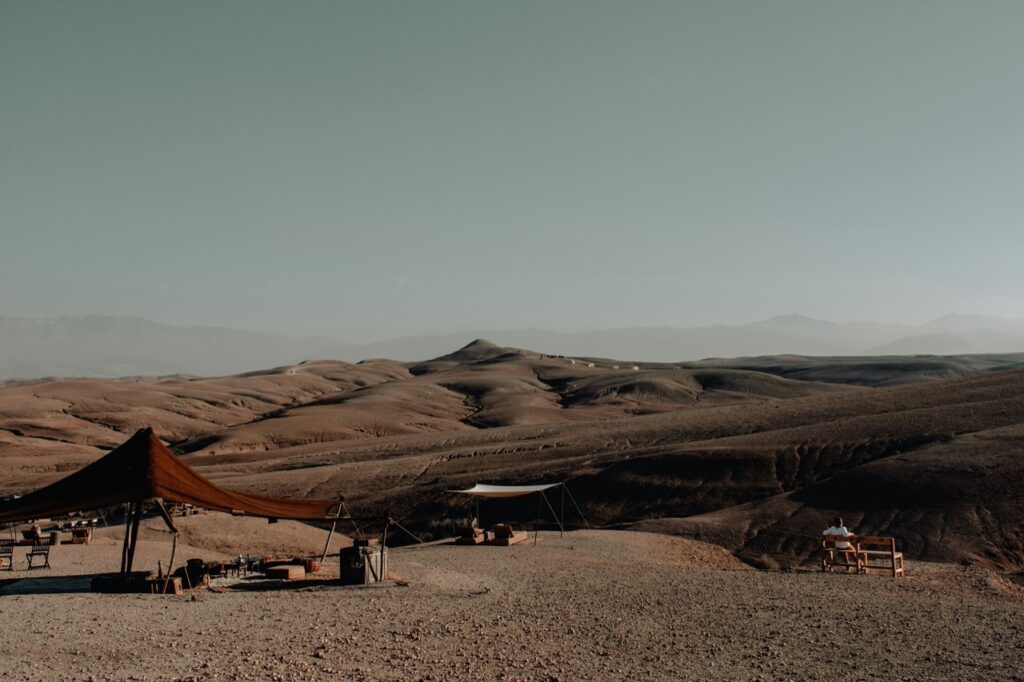
- Agafay Desert: about 45 minutes away, this stony desert of rolling hills is perfect for camel rides, quad biking and sunset dinners at desert camps.
- Atlas Mountains and the Ourika Valley: walk to waterfalls, visit Berber villages and have lunch by the river, all within about an hour of the city.
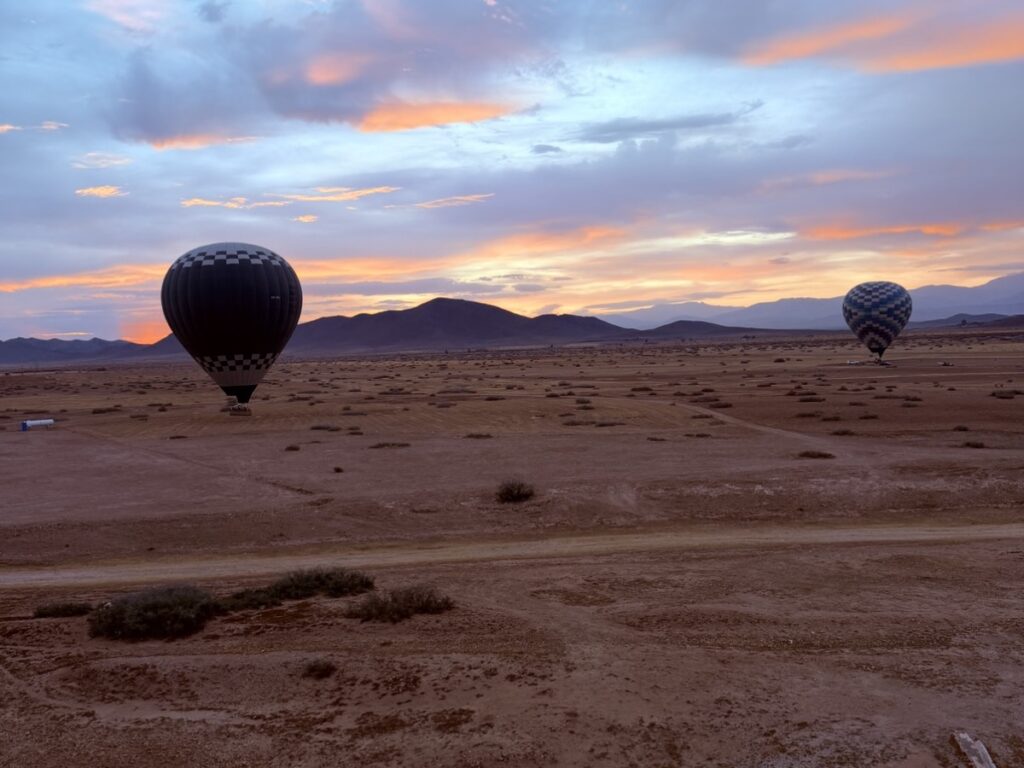
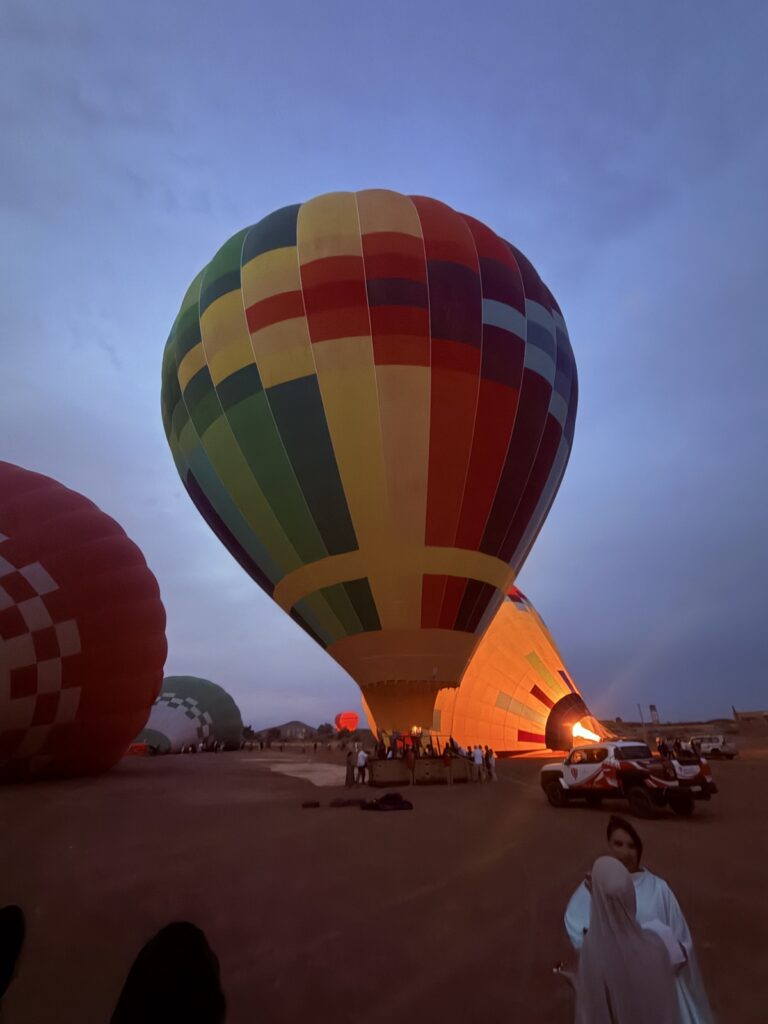
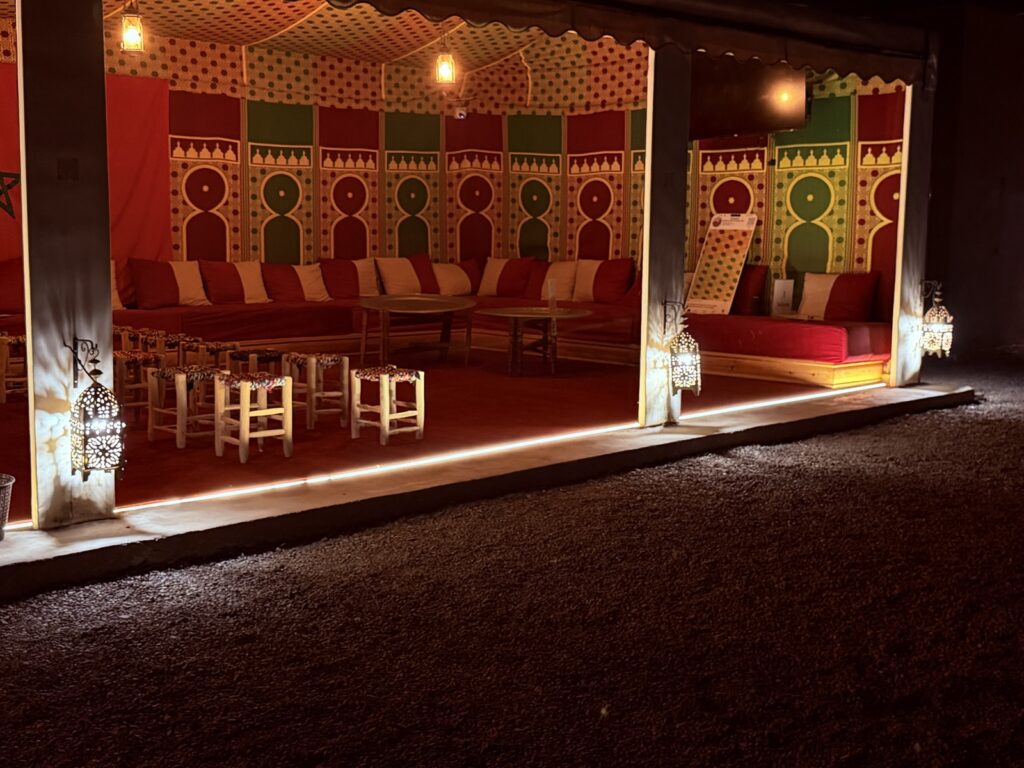
- Hot-air balloon ride and Berber breakfast: take off at dawn for sunrise views over the desert and the Atlas Mountains. Most flights finish with a traditional Berber breakfast, typically mint tea, msemen flatbreads, olive oil, honey and amlou (an almond and argan spread). It’s an early start, as pick-ups are usually well before sunrise, and it’s the one trip we booked ahead.
- Essaouira: the laid-back, windswept coastal town is around three hours away and makes a long but rewarding day trip.
Our experience: we flew with Adventure Balloon Marrakech and would definitely recommend them. The team were polite and accommodating from start to finish. A private transfer collected us from our hotel at 4:30am, and at the launch site there was unlimited mint tea and Moroccan coffee while the crew got the balloons ready. Once up, we spent about an hour and a half in the air, climbing to around 1,000 metres as the sun rose, with the Atlas Mountains on the horizon. Our pilot was really informative throughout, and the views were breathtaking. A Berber breakfast was included in the package, but we skipped it and headed straight back to our hotel, where breakfast was part of our all-inclusive stay. We paid roughly £230 for the four of us (just under £60 each).
Watch: our sunrise balloon flight over the desert outside Marrakech. Subscribe to our YouTube channel for a new travel Short every week.
Watch Out for Touts and Day-Trip Scams
You’ll be approached by people offering desert quad biking and other experiences. In our case, their prices seemed to be more than double what you’d pay elsewhere, and the companies didn’t look reputable.
Our advice: pre-book day trips, excursions and experiences through a reputable platform such as Expedia, or ask your hotel. Hotels usually know which local operators are reliable and can recommend them.
Marrakech Travel Guide: Practical Tips
- Entry requirements: UK passport holders don’t need a visa for tourist stays of up to 90 days. Your passport should be valid for your whole stay; check the latest UK government travel advice before you go.
- Eating vegetarian or vegan: it’s easier than you might expect. Vegetable tagines, couscous, lentils, salads and fresh bread are everywhere, but stocks and fillings can contain meat, so ask for dishes “without meat” and check with your riad or hotel.
- Money: the Moroccan dirham (MAD) is a closed currency, so you can only get it once you arrive. Use ATMs in the city or at the airport, and carry cash for the souks, taxis and small cafés.
- Best time to visit: spring (March to May) and autumn (late September to November) are ideal. In October, expect warm, sunny days in the high 20s°C and cooler evenings. Summers are very hot.
- What to wear: dress modestly, with shoulders and knees covered. It’s respectful, and it’s more comfortable in the sun.
- Getting around the medina: the lanes are a maze, so download an offline map before you go. Our pick of the best travel apps covers the ones we use.
- Taxis and Uber: agree the fare before you get into a taxi, or ask for the meter to be used. Uber also works in Marrakech: a ride from the Palmeraie into the medina cost us around 75 MAD each way.
- Stay safe: Marrakech is generally safe for visitors, but watch out for pickpockets in crowds and for “guides” who lead you to shops. Make sure your travel insurance covers you before you travel.
- Where to stay: for the full experience, stay in a traditional riad inside the medina, built around a courtyard and often with a rooftop terrace and plunge pool. If you would rather have a big pool, more space and a quiet base to come back to after the souks, look at the Palmeraie, the palm grove on the north-eastern edge of the city. We stayed at the Be Live Collection Marrakech, an adults-only, all-inclusive resort in the Palmeraie, about 6 km from the centre, with two pools and a spa. You can read our review of the hotel below. Wherever you stay, it is worth comparing Marrakech hotel prices, as places range from simple guesthouses to boutique riads and big resorts.
Where We Stayed: Be Live Collection Marrakech (Adults Only)
We stayed at the adults-only Be Live Collection Marrakech in the Palmeraie, and it was lovely. Our all-inclusive package covered all meals and drinks, apart from premium wines and spirits, and the staff were pleasant and accommodating throughout.
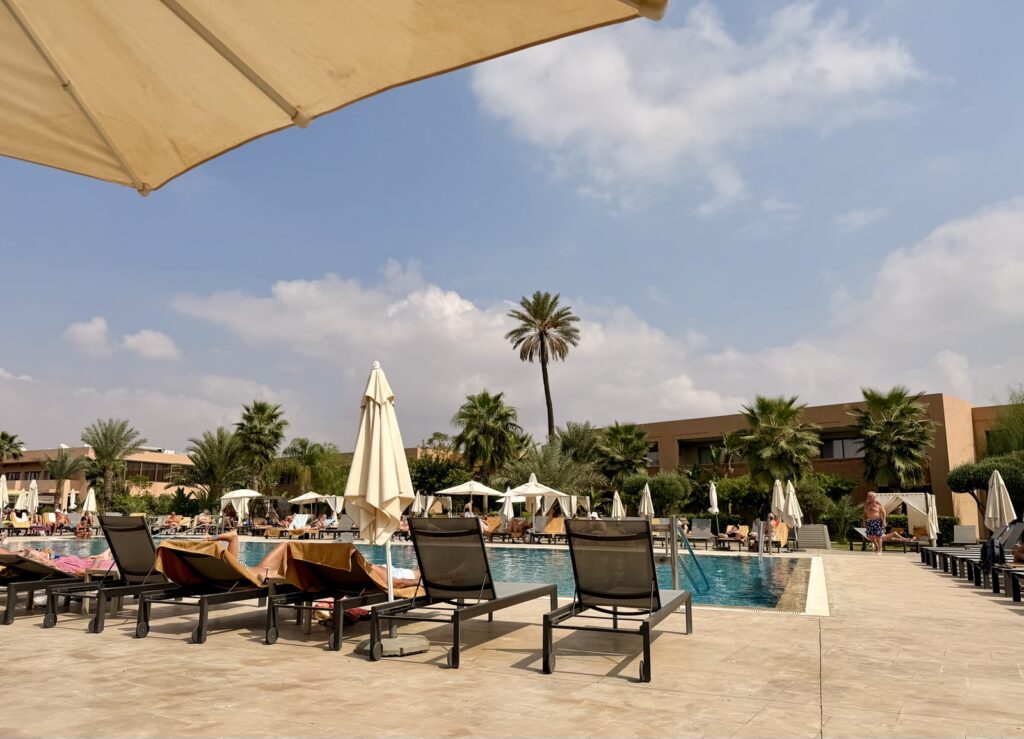
- Rooms: big and spacious. Ours was on the ground floor, with a terrace overlooking the main pool, and a large bathroom with a shower, a bath and his-and-hers basins. Rooms were made up daily, with fresh towels.
- Pools and activities: the grounds are wonderful, with two pools: one with music and aqua aerobics, the other quiet and peaceful, so you can choose between a lively day and a lazy one. There’s also archery and a range of other activities.
- Food: the buffet restaurant mixes Moroccan and Mediterranean dishes. The vegetable tagine and the chicken tagine were delicious (and moreish), alongside a large salad bar, couscous, plenty of seafood, fresh baguettes and breads at every meal, and a live pizza and pasta counter. Breakfast ranged from cereals, eggs, fruit and pancakes to local dishes.
- Spa: we booked a hammam and massage package. The hammam was the highlight.
- Getting into the medina: the hotel runs a return shuttle three times a day, stopping near the Koutoubia Mosque. We used it once and found it very comfortable, but for the rest of the trip we took Uber, which costs around 75 MAD each way and lets you come and go when you like.
Would we go back? Definitely. It’s a relaxing base with good food and plenty to do, and the medina is a short ride away when you want the buzz of the souks.
Final Thoughts
Marrakech is chaotic, colourful and utterly unforgettable. Give yourself time to wander the souks, soak up the palaces and gardens, and simply watch the city go by from a rooftop. Add a day trip into the Agafay Desert or the Atlas Mountains, and you have the perfect introduction to the country.
Where next? Keep exploring Africa with our two-week Tanzania itinerary or our Garden Route road trip in South Africa.