Castles, Vineyards and River Cruises: Exploring Germany’s Rhine Valley
This Rhine Valley travel guide covers one of those places that stays with you long after you get home. Between Rüdesheim and Koblenz, the Rhine winds through a steep, vine-covered gorge lined with medieval castles, half-timbered villages and legendary cliffs, and the best way to see it is from the water.
Below we explain how to choose between a day cruise and a longer river cruise, when to go, what to see in Rüdesheim, which castles are worth your time, the villages we love most, and practical tips for getting there and around.
Why the Rhine Valley Belongs on Your Bucket List
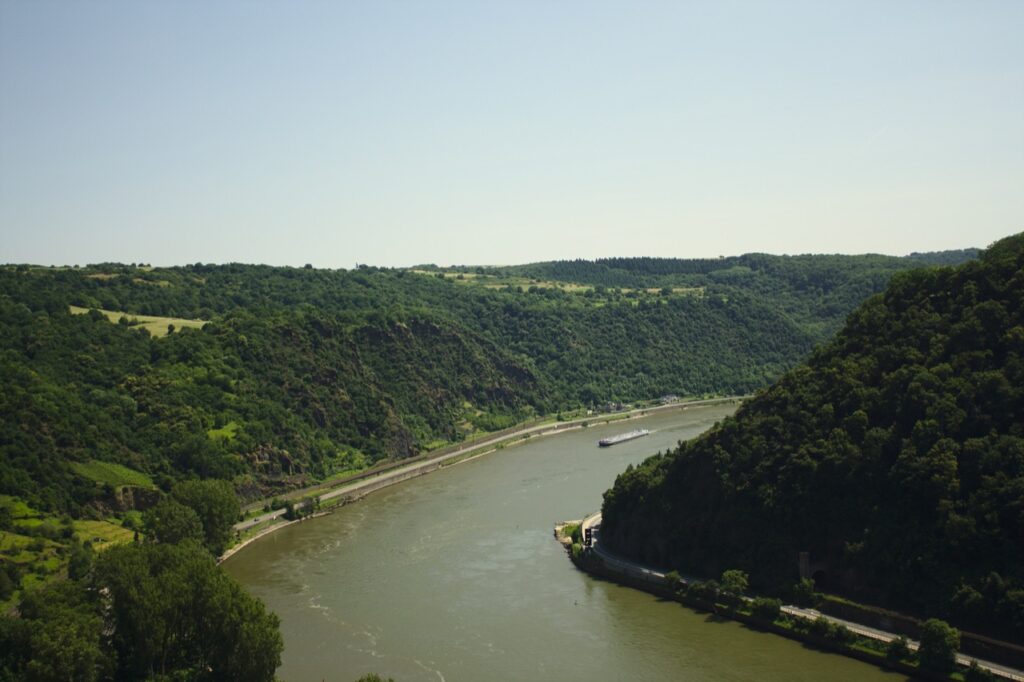
Few landscapes in Europe can match the Rhine Gorge. The Upper Middle Rhine Valley, a UNESCO World Heritage Site since 2002, runs for around 65 kilometres between Bingen and Rüdesheim in the south and Koblenz in the north. Steep slate slopes rise from the river, terraced with vineyards that date back to Roman times, and dozens of castles sit on the clifftops and even in the river itself.
The valley is also the heart of German Romantic legend. The Loreley, a slate cliff rising about 130 metres above the river near St. Goarshausen, is said to be where a siren’s song lured sailors to their doom on the rocks below. Standing at the top and looking down at the narrow bend, it’s easy to see where the story came from.
Planning Your Rhine River Cruise
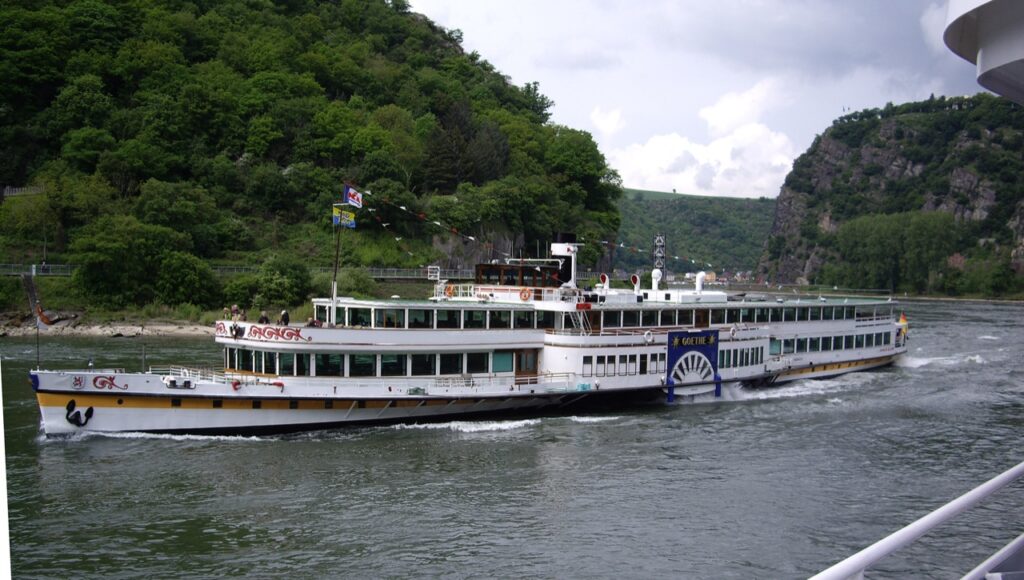
A Rhine River cruise is the most spectacular way to experience the valley, with castles and villages sliding past on both banks. There are two main ways to do it.
Day Cruises vs Multi-Day River Cruises
If you have limited time, day cruises are ideal. Operators such as KD (Köln-Düsseldorfer) run scheduled boats from spring to autumn, typically April to October, between towns including Rüdesheim, Bingen, Bacharach, St. Goar and Koblenz. You can hop on and off, and the stretch between Bacharach and St. Goar, past the Loreley, is the most dramatic.
For a more relaxed trip, multi-day river cruises with companies such as Viking, AmaWaterways and Avalon cover much more of the river, often between Amsterdam and Basel. Cabins, meals, guided shore excursions and commentary are all included, but you’ll usually see the Rhine Gorge itself in just one afternoon.
Best Time to Visit
The valley is beautiful all year, but the best time for most visitors is late April to early October. Spring brings blossom and fresh green vines, summer brings long evenings and busy riverside terraces, and September and October are arguably the best of all, when the vineyards turn gold, the grape harvest begins and wine festivals fill the towns.
In December, the valley takes on a different kind of charm. Rüdesheim’s Christmas Market of Nations is one of the prettiest in the region. For more ideas, see our guide to the best Christmas markets in Germany.
Rüdesheim am Rhein: The Gateway to the Rhine Valley
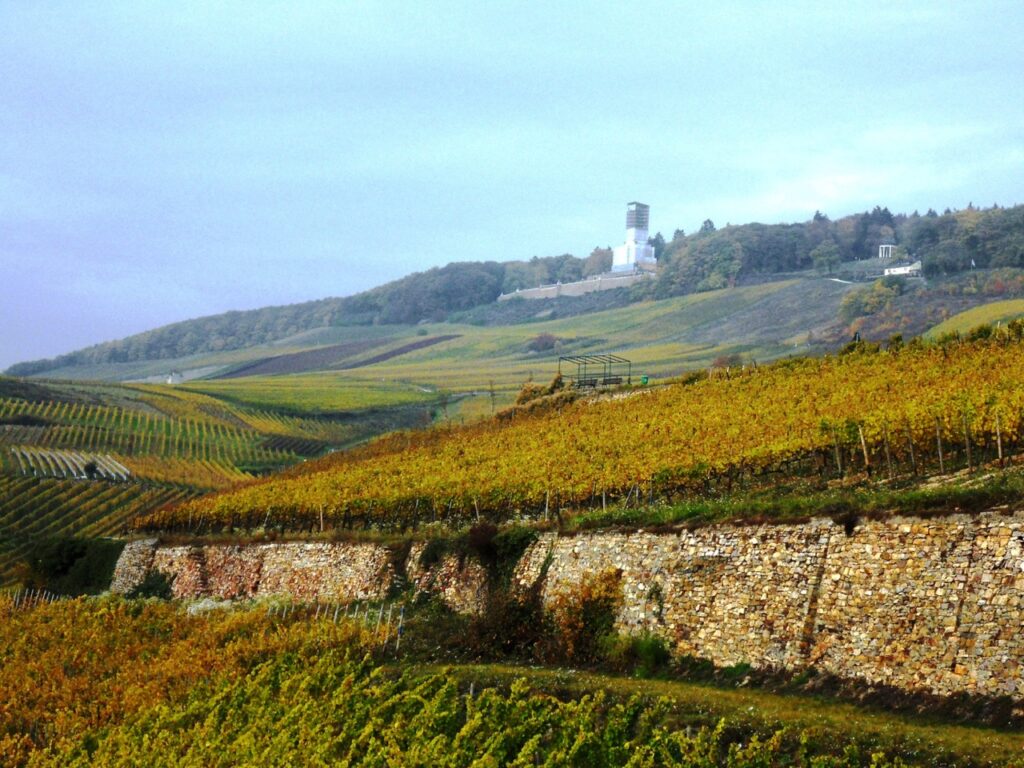
Few visits to the Rhine Valley skip Rüdesheim am Rhein, one of Germany’s best-loved wine towns. It sits at the southern entrance to the World Heritage stretch and makes a perfect base.
What to See and Do in Rüdesheim
- Drosselgasse: a narrow cobbled lane just 144 metres long, packed with wine taverns, restaurants and music. It’s lively and fun, but very busy at peak times, so go in the morning or late evening.
- Niederwald Monument: the huge statue of Germania above the town, unveiled in 1883 to mark German unification. Ride the cable car up over the vineyards for superb views of the valley.
- Brömserburg: one of the oldest castles on the Rhine, right on the riverfront in the town centre.
- Riesling tasting: the Rheingau is famous for Riesling, and the town’s wine taverns and nearby estates are the best places to try it.
Our tip: combine the cable car with the chairlift down to Assmannshausen, then take the boat back to Rüdesheim for a perfect loop.
The Rhine’s Castle Trail: Medieval Fortresses Along the River
The Middle Rhine has one of the highest concentrations of castles anywhere in Europe, with around 40 castles and ruins along this short stretch. Many can be visited, and a few you can even stay in.
Must-Visit Castles on the Rhine
Marksburg Castle above Braubach is the only hilltop castle on the Middle Rhine that was never destroyed. While French troops wrecked many Rhine castles in the late 17th century, Marksburg survived intact, and guided tours take you through its armoury, great hall, kitchen and cellars.
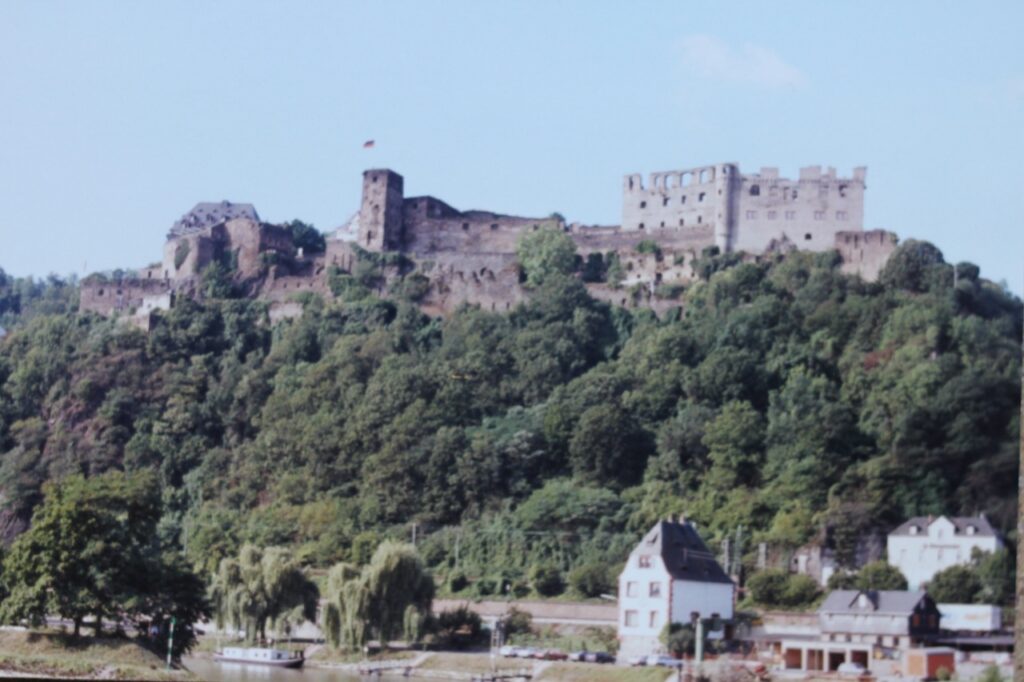
Rheinfels Castle above St. Goar is mostly in ruins, but it’s huge and wonderfully atmospheric. Once the largest fortress on the Middle Rhine, it has tunnels you can explore with a torch, and a hotel now stands alongside the ruins.
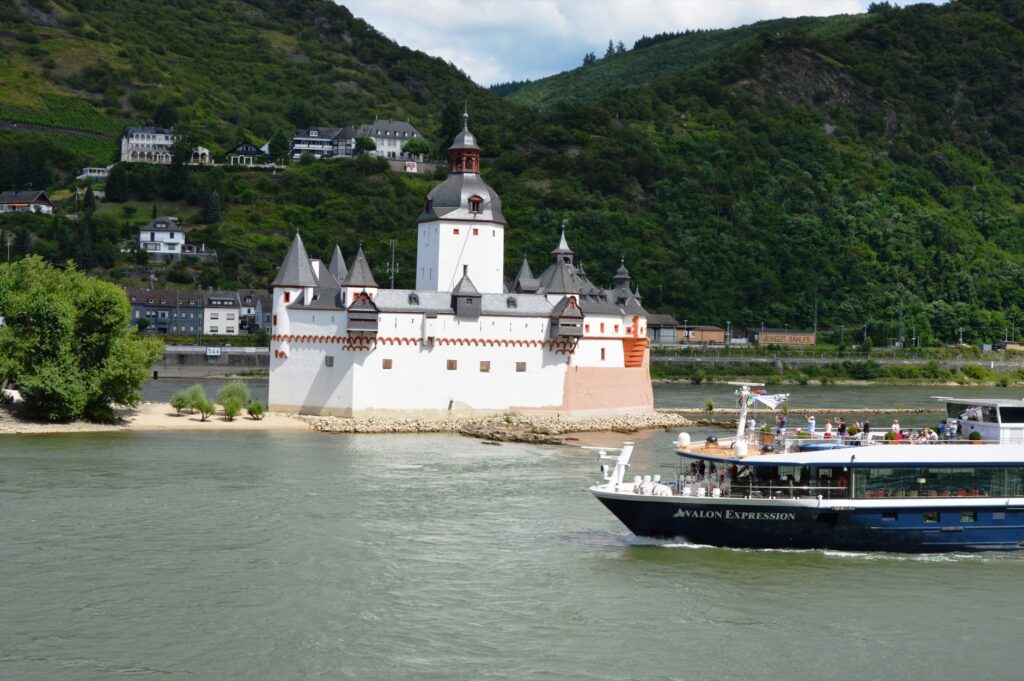
Pfalzgrafenstein Castle, nicknamed the “stone ship”, is one of the Rhine’s most memorable sights. Built on a small island in the river in the 14th century as a toll station, it’s reached by a small ferry from the village of Kaub.
Stahleck Castle above Bacharach is now a youth hostel, offering some of the best views in the valley at a very reasonable price. Even if you’re not staying, the short climb up from the village is worth it.
Exploring the Rhine Valley Villages
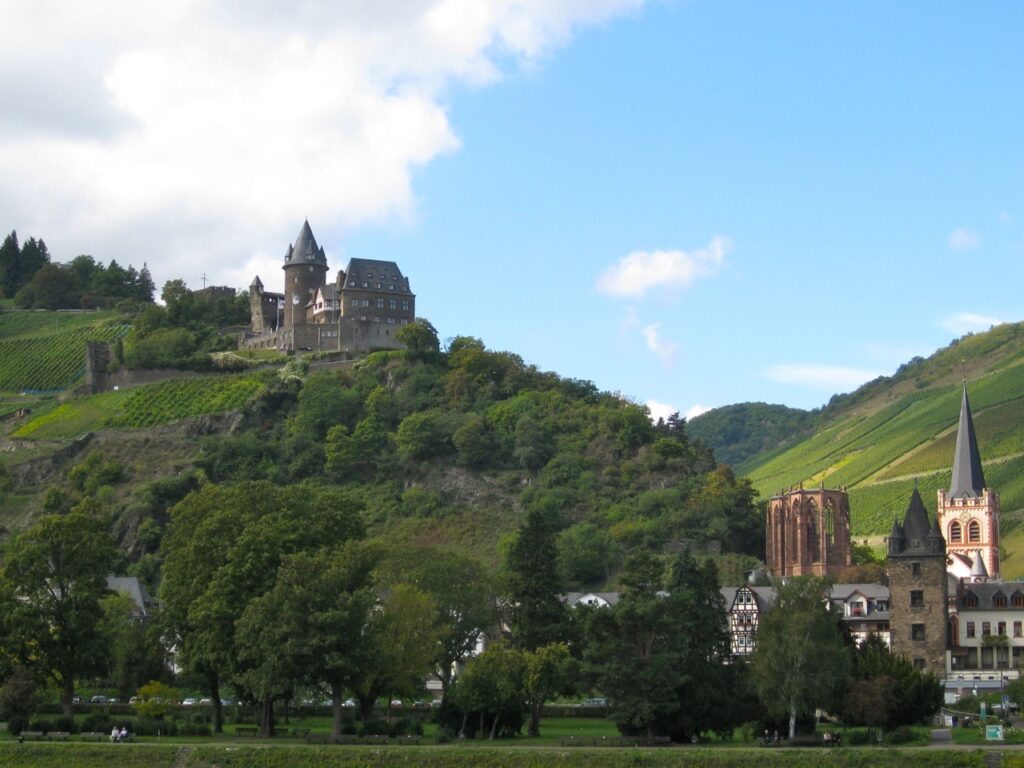
The castles and cruise ships grab the headlines, but the villages are just as special. Bacharach is a beautifully preserved medieval town, still ringed by its old walls and towers, with lanes of half-timbered houses that feel little changed in centuries.
Oberwesel has one of the best-preserved sets of medieval town walls in Germany, two fine Gothic churches and Schönburg Castle above the town. Boppard, further north, is the place for walkers, with forest trails above one of the Rhine’s most dramatic bends.
Rhine Valley Travel Guide: Practical Tips
- Getting there: Frankfurt Airport is the most convenient gateway. Mainz is under half an hour away by train, and Rüdesheim and Bingen are around an hour away.
- Getting around: regional trains run along both banks of the river and stop at almost every town, and car and passenger ferries cross the Rhine at several points, as there are no bridges across the gorge between Bingen and Koblenz. Combining trains, boats and ferries is easy and fun.
- Check river levels: in hot, dry late summers, low water can occasionally disrupt cruise timetables, so check with your operator shortly before you travel.
- Where to stay: Rüdesheim, Bacharach and St. Goar all have good options, from family-run guesthouses to castle hotels. It’s worth comparing Rüdesheim hotel prices before you book.
- Currency and language: euro (€). English is widely spoken in tourist areas, but a few words of German are always appreciated.
- Wine tasting: look out for local wine festivals in September and October for the most authentic tastings.
Final Thoughts
The Rhine Valley really does have it all: dramatic scenery, centuries of history, world-class wine and a river that’s a joy to travel on. Whether you’re gliding past castles on a cruise, sipping Riesling in Rüdesheim or exploring the tunnels of a medieval fortress, it’s a place where every bend in the river reveals something new.
Where next? Continue your trip through Germany with our Neuschwanstein Castle and Bavaria road trip guide or our Berlin travel guide, or plan a winter visit with our Germany Christmas markets guide.