
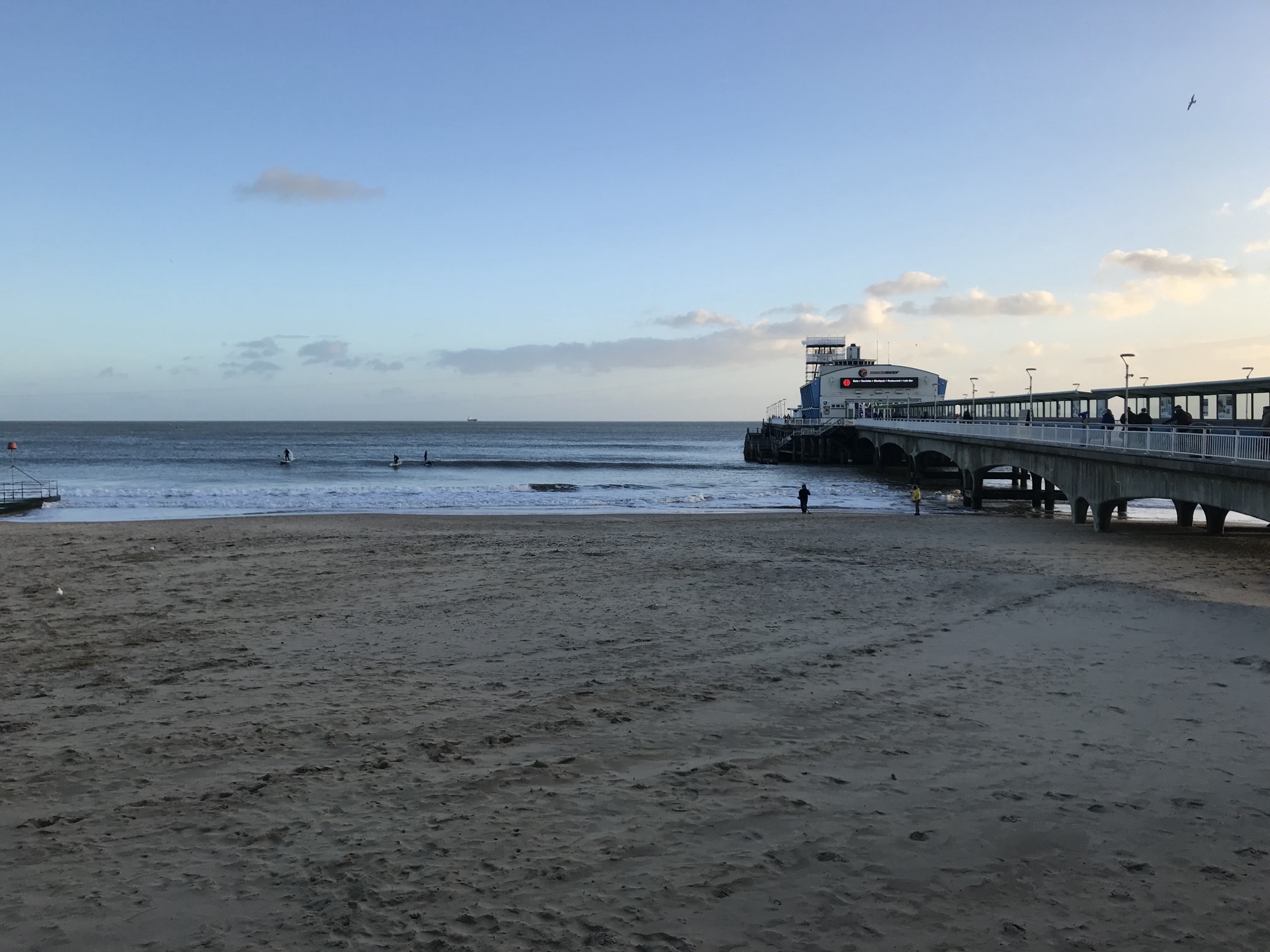
Bournemouth: Sandy Beaches and Britain’s Most Dramatic Coastline
Bournemouth does something a lot of English seaside towns can’t: it actually has sand. Seven miles of it, in fact, backed by pine-covered clifftop gardens and a proper Victorian pier — and that’s before you even get to the real draw. Drive an hour west and you’re standing in front of Durdle Door, one of the most photographed natural landmarks in the country, on a stretch of coastline so geologically significant it’s a UNESCO World Heritage Site.
We used Bournemouth as our base for a long weekend exploring the Dorset coast, and it’s the easiest combination we’ve found in the UK: a proper beach town to come back to each evening, with some of Britain’s most dramatic scenery within day-trip reach. Here’s how to plan it.
Getting to Bournemouth
Bournemouth sits on the Dorset coast, about 2 hours by direct train from London Waterloo, or roughly 2 hours driving via the M3 and A31. Bournemouth Airport also runs a handful of direct European and UK routes if you’re not coming from London. However you arrive, you’ll want a car (or at least be comfortable with local buses) for the Jurassic Coast side of this trip — Durdle Door and Old Harry Rocks aren’t reachable by rail.
- By train: Direct services from London Waterloo take around 2 hours.
- By car: About 2 hours from London via the M3 and A31; central Bournemouth has multiple seafront and town-centre car parks.
- By air: Bournemouth Airport handles a small number of UK and European routes.
- Getting around once there: a car makes the Jurassic Coast day trips far easier — bus routes exist but add significant time.
Bournemouth Beach and Pier
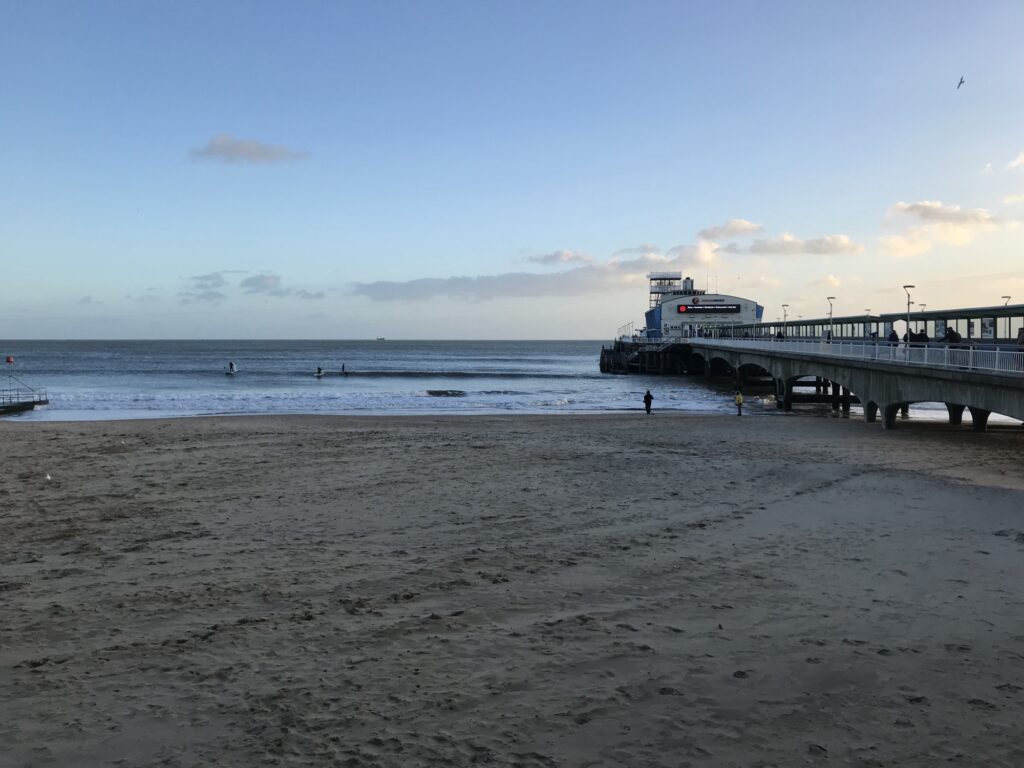
Photo: Bryn Holmes / Wikimedia Commons (CC BY-SA 2.0)
Seven Miles of Blue Flag Sand
Bournemouth’s beach runs almost uninterrupted from Southbourne in the east to Alum Chine in the west, and most of it holds Blue Flag status. It’s genuinely one of the best beaches in the UK for actually lying on — soft sand rather than shingle, which puts it in a small club among English seaside towns.
Bournemouth Pier
The pier has anchored the seafront since 1880 and remains the centre of things: a small amusement arcade, a zip line running out over the beach if you want the view from above, and — at the base — Pier Approach, where most of the town’s seafront restaurants and bars cluster.
The Chines and Clifftop Gardens
Look up from the beach and you’ll notice Bournemouth’s clifftop is threaded with “chines” — narrow, wooded ravines that cut down to the sand, each one a proper mini nature walk. The Lower, Central and Upper Gardens run the length of the town just back from the cliff edge, planted out since Victorian times and still one of the nicest free things to do here.
Old Harry Rocks — The Jurassic Coast on Your Doorstep

Most people don’t realise the Jurassic Coast starts almost on Bournemouth’s doorstep. Old Harry Rocks — a set of brilliant white chalk stacks marking the eastern tip of the World Heritage Site — sits just across Poole Harbour, and you don’t need a car to reach them.
Getting There: Sandbanks Ferry and the Studland Walk
Take the chain ferry from Sandbanks across the harbour mouth to Studland, then it’s a flat, easy coastal walk of about 2 miles each way out to the rocks. Go for the late afternoon light if you can — the chalk turns almost gold against the blue of the Channel. Studland’s own beach is worth an hour before or after, too.
Durdle Door and Lulworth Cove: A Full Jurassic Coast Day Trip
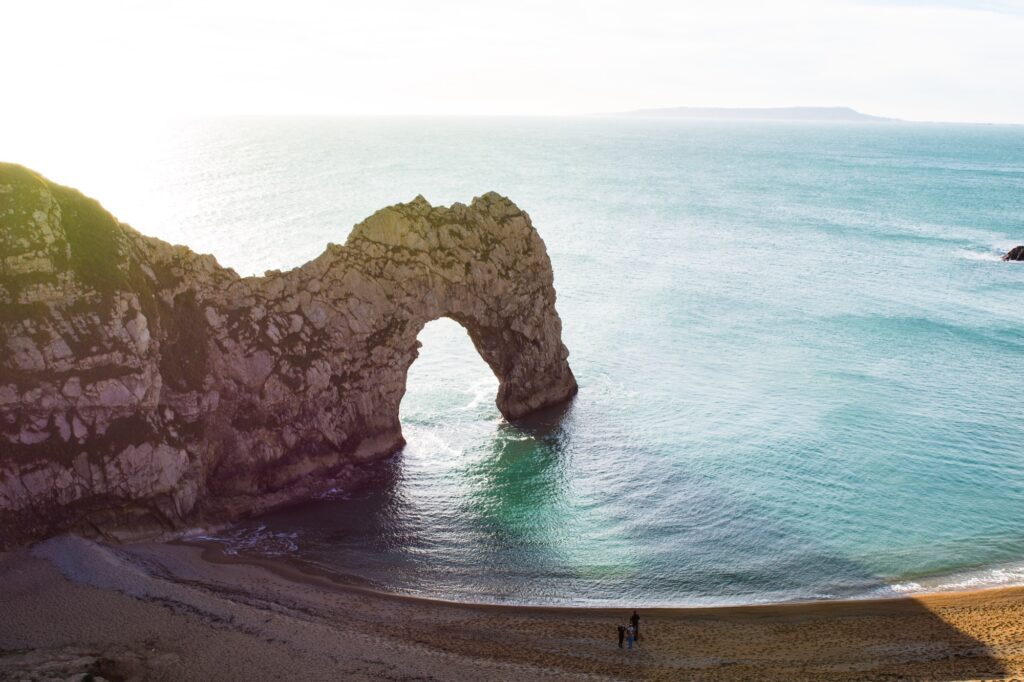
This is the reason most people add Bournemouth to a UK coastal itinerary in the first place. Durdle Door — a vast natural limestone arch standing in the sea — is around 45 minutes’ drive west of Bournemouth, near the village of West Lulworth, and it’s every bit as impressive in person as in the photos.
Durdle Door Itself
There’s a car park at the top of the cliff (Durdle Door Holiday Park), from where a steep path drops down to the beach beside the arch. It’s a proper set of steps rather than a stroll — budget 15–20 minutes down, longer coming back up — but swimming in the cove right next to the arch is worth every step.
Lulworth Cove
A 20-minute walk (or a couple of minutes’ drive) east of Durdle Door is Lulworth Cove, an almost perfectly circular bay carved out of the coastline over thousands of years. It’s calmer and more sheltered than Durdle Door’s beach, with a small village, cafés, and an excellent free visitor centre explaining exactly how this coastline came to look the way it does.
Before you go:
- Arrive early in summer — the main car park fills by mid-morning on good-weather weekends.
- Wear proper shoes for the steps down to Durdle Door beach; flip-flops are a genuine hazard on the way back up.
- The Lulworth Range Walks (the coast path east of the cove) sometimes close for military firing exercises — check the MOD’s published dates before planning a longer walk.
- Bring cash or a card for the car park — it fills fast and isn’t free.
Poole Harbour and Brownsea Island
Just next door to Bournemouth, Poole Harbour is the second-largest natural harbour in the world, and Brownsea Island sits right in the middle of it — a National Trust reserve reachable by a short ferry from Poole Quay or Sandbanks. It’s one of the last strongholds of the native red squirrel in England, alongside a good stretch of heathland and beach walking. Sandbanks itself, the peninsula between the harbour and the sea, is worth a look even just for the view — it’s regularly ranked among the most expensive stretches of real estate in the world, sitting right next to a very ordinary, very pleasant public beach.
Where to Eat and Stay in Bournemouth
Pier Approach and the streets just back from it have the highest concentration of seafront restaurants, from casual fish and chips to sit-down seafood looking straight out at the pier. For something quieter, Westbourne — a 15-minute walk or short bus ride west of the centre — has a good run of independent cafés and restaurants away from the peak-season crowds.
Where to stay: basing yourself near the town centre or East Cliff puts the beach, the pier and the gardens all within walking distance, with easy access to the roads out toward Poole and the Jurassic Coast. It’s worth comparing Bournemouth hotel prices across booking sites before you book, since rates rise sharply in July and August.
Best Time to Visit Bournemouth
Late May through September gives you the best odds of good beach weather and long daylight for the Durdle Door day trip, though July and August bring the biggest crowds — and the fullest car parks at Lulworth. Late spring and early autumn are a good compromise: still warm enough to swim on a good day, noticeably quieter on the coast path, and easier parking all round.
Practical Bournemouth Travel Tips
- Rent a car if the Jurassic Coast is the priority. Durdle Door and Old Harry Rocks are both awkward without one, even though Bournemouth itself is easily walkable.
- Book Durdle Door parking online in peak season where possible — it reduces the risk of being turned away on a packed day.
- Pack proper shoes, not just beach sandals — both the Durdle Door steps and the Studland coast path reward decent footwear.
- The Sandbanks chain ferry runs on a fixed schedule and does occasionally close for maintenance or bad weather — check before planning your day around it.
- Bournemouth’s beach huts can be hired by the day if you want a base on the sand rather than just a towel.
- Check Lulworth Range Walks opening dates before planning the coast path beyond Lulworth Cove.
Final Thoughts
Bournemouth doesn’t get the same attention as Brighton or Cornwall, but it’s hard to think of another UK base that pairs an actual sandy beach with scenery as dramatic as Durdle Door and Old Harry Rocks, all within an hour’s drive. Give it a long weekend, split roughly half in town and half out along the coast, and you’ll see why we keep going back.
Where next? Further east along the South Coast, our Eastbourne guide covers Beachy Head and the Seven Sisters if you want to see chalk cliffs from the other end of the Jurassic Coast’s neighbourhood. Before you go, make sure you’ve got the right travel apps lined up, and if you’re building out a wider UK coastal trip, don’t miss our guide to solo vs group travel for help deciding how to plan it.