
Sicily in mid-October is close to ideal: warm, sunny days, a sea that is still comfortable to swim in, and none of the August crowds. We drove the coast from Catania to Palermo over ten days, and it turned out to be the right way to see how much the island changes as you go — Greek theatres and a live volcano in the east, honey-coloured baroque hill towns in the south-east, Greek temples and wine country along the south coast, then Arab-Norman Palermo at the end.
This is the route we took, written up day by day with the hotels and restaurants we actually used. Two days are different: the western corner around Marsala and Trapani, and the run into Palermo, are the stretch we did not drive ourselves. Those are written as suggestions and flagged as such. Everything else is first-hand.
Ten days, one direction, two airports. You pick the car up on the east coast and drop it on the north coast, which is what stops the trip doubling back on itself.
| Day | Where | Overnight |
|---|---|---|
| 1 | Catania, then the Etna foothills | Zash, near Riposto |
| 2 | Taormina, Isola Bella, Riposto | Zash, near Riposto |
| 3 | Coast road south, Syracuse and Ortigia | Syracuse |
| 4 | Neapolis Archaeological Park, on to Noto | Noto |
| 5 | Noto, Marzamemi, Ragusa | Ragusa |
| 6 | Agrigento and the Valley of the Temples | San Leone |
| 7 | Scala dei Turchi, Sciacca, Menfi wine country | Menfi |
| 8 | Selinunte, Marsala, Trapani (suggested) | Trapani |
| 9 | Segesta, the Gulf of Castellammare, into Palermo (suggested) | Palermo |
| 10 | Palermo | Palermo |
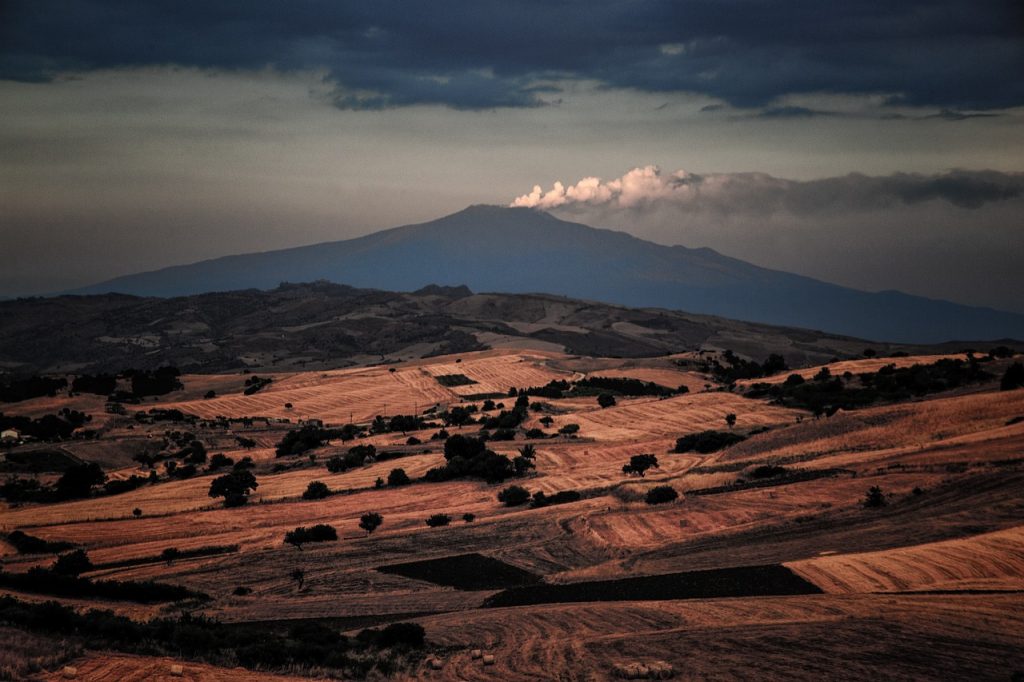
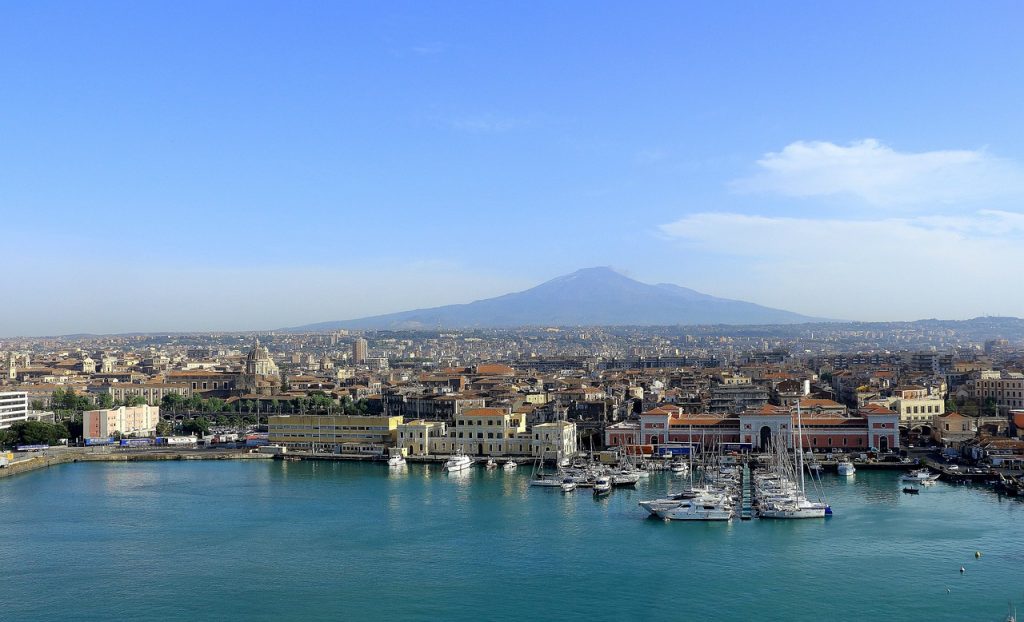
Kick off your Sicilian adventure in the bustling city of Catania.
Fly into Catania on Sicily’s eastern coast. The city is known for its baroque architecture, its thriving markets and its proximity to Mount Etna, Europe’s most active volcano. Spend the afternoon in the centre: stroll around the Piazza del Duomo and take in the striking Catania Cathedral. Almost everything here is built from the black volcanic stone that gives the whole city its colour, which is a useful reminder of what sits on the skyline.
We stopped for lunch at Trattoria La Pigna Verde, a traditional Sicilian restaurant about five minutes’ walk from the cathedral — a cosy spot known for dishes like pasta alla Norma and plenty of seafood. The vibe is relaxed and it is a favourite among locals.
From there it is roughly an hour’s drive north to Zash Country Boutique Hotel & Spa, where we stayed for two nights. It is a genuine retreat in the countryside near Mount Etna, housed in a renovated early twentieth-century manor and surrounded by citrus groves. We spent the rest of the afternoon on the grounds, started the evening with drinks at the hotel bar, and ate in the hotel restaurant, which held a Michelin star at the time of our visit. The menu is seasonal and firmly Sicilian, and the dining room is modern and intimate.
Basing yourself outside Catania for the first two nights is worth the drive. It puts both Etna and Taormina within easy reach, and it means you are not navigating a city centre twice in a hire car you collected an hour ago.
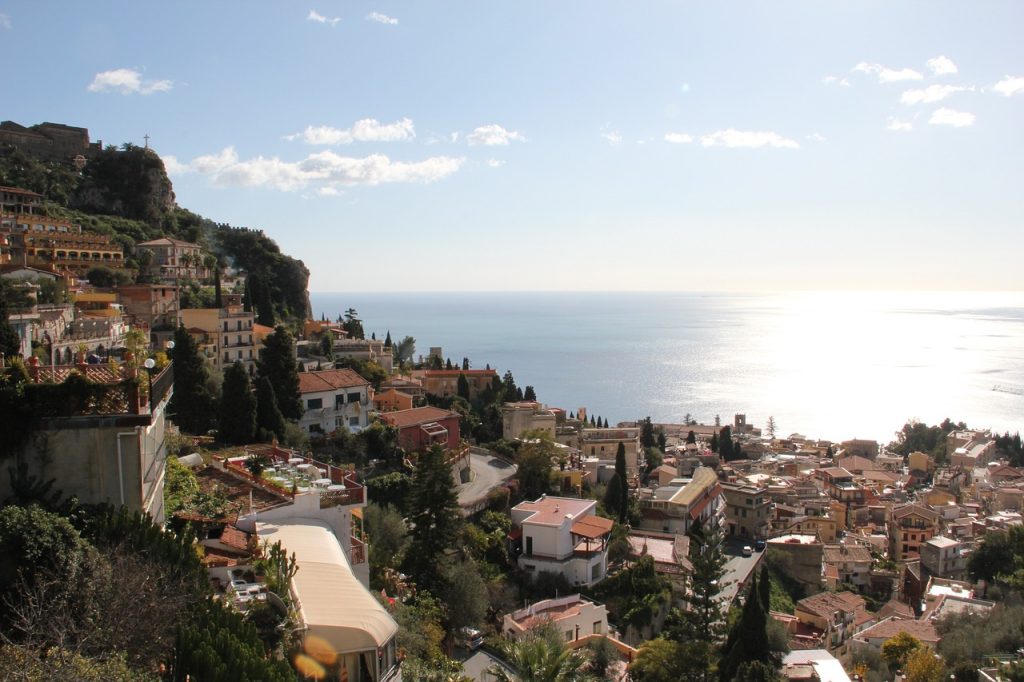
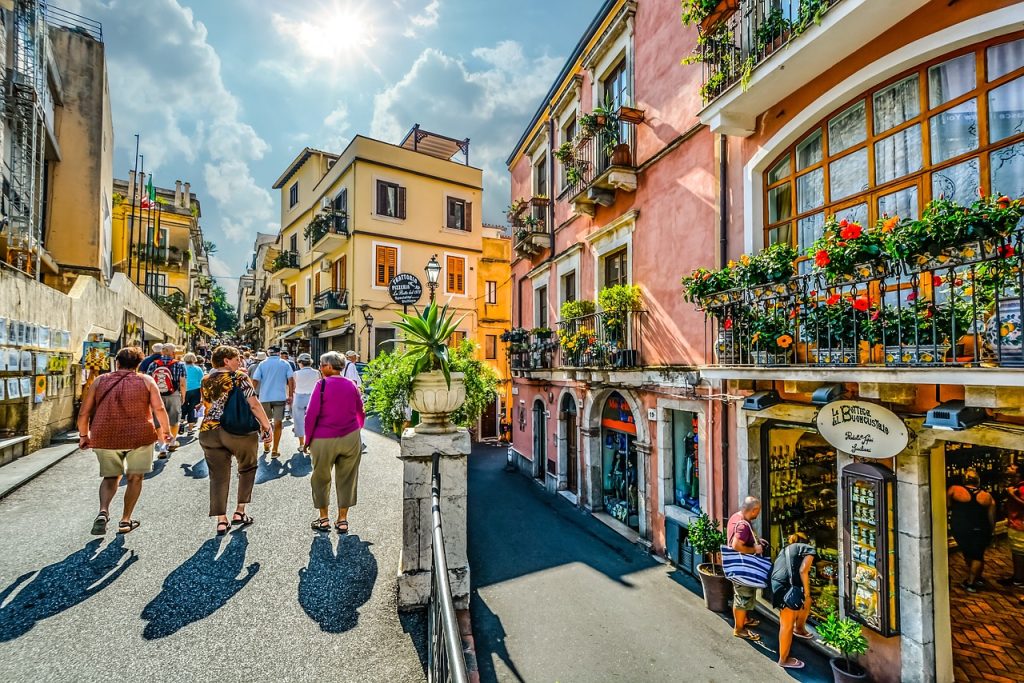
Head north to Taormina, Sicily’s jewel on the coast.
A short drive north brings you to Taormina, a hilltop town known for its views over Mount Etna and the Ionian Sea. The Teatro Antico, the Greek theatre, is the highlight and rightly so: it frames the volcano and the sea in a single view, which is why it appears on every postcard of Sicily. Afterwards, wander Corso Umberto for the shops and lunch at one of the terrace restaurants overlooking the water.
Below the town, Isola Bella is a tiny island joined to the shore by a narrow sandbar. The water is still warm enough to swim in October, so pack a swimsuit. A cable car runs between Taormina and the beach at Mazzarò if you would rather not tackle the hill on foot — and on the way back up, you would rather not.
Drive back to the hotel in the afternoon, then head into Riposto for the evening. It is a laid-back seaside town that comes alive after dark. Start with a walk around Riposto Marina, which is lovely at sunset, with fishing boats and yachts along the shore and Etna in the distance.
For dinner, Ristorante Pizzeria Al Porticciolo sits near the marina with views over the waterfront. Afterwards we went on to Casamatta, a trendy, laid-back bar serving creative cocktails alongside Italian classics like an Aperol Spritz, and finished at Bar Gallego for cannoli, cassata and gelato, plus a range of local liqueurs including limoncello.
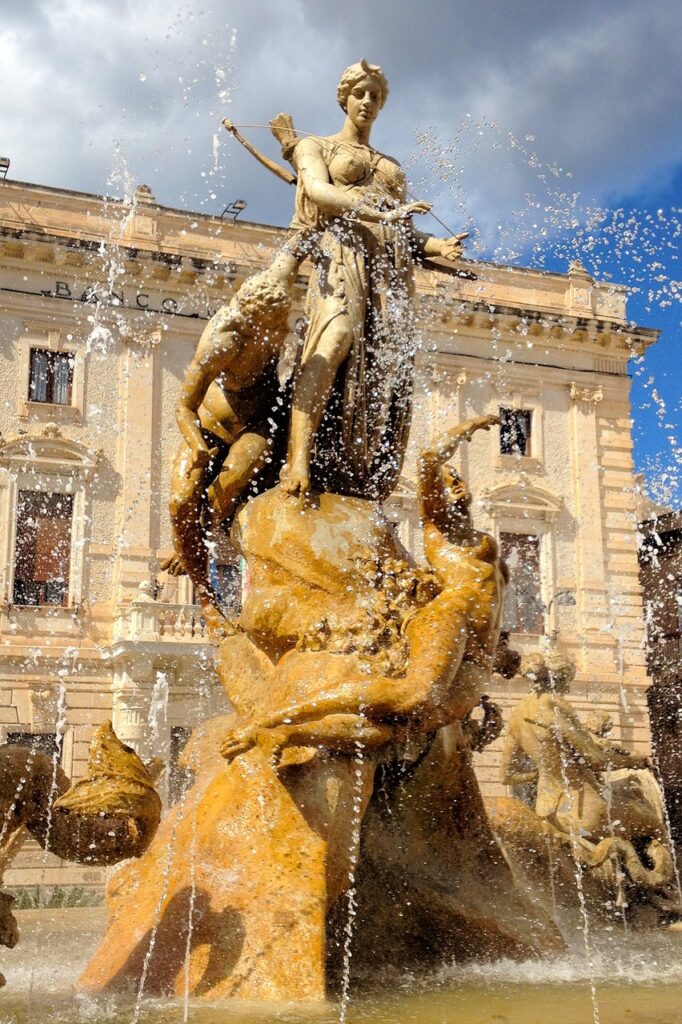
Travel south along the coast to the historic city of Syracuse.
Check out of Zash and drive south along the coast towards Syracuse. Take your time over it: there are beaches all the way down, and we broke the drive for a swim in the Ionian and a long lunch rather than pushing straight through.
Check in to Nostos Rooms & Apartments in Syracuse, a city that mixes ancient history with busy modern life.
In the evening, drive towards the statue of Archimedes and park by the bridge onto Ortigia, the small island that is the historical heart of Syracuse. Walk across to the Temple of Apollo, on through the night market, and stop at Bar Cristina for a drink overlooking the temple.
From there it is a brisk walk up to the Fontana di Diana, which is worth seeing lit up after dark, with dinner in one of the many restaurants around the square. We ate at MOON — Move Ortigia Out of Normality — a vegan restaurant that is genuinely out of this world and well worth booking ahead.
Ortigia is compact and almost entirely pedestrian, so leave the car on the mainland side of the bridge and walk in.
Greek and Roman Syracuse in the morning, baroque Sicily by the afternoon.
Spend the morning at the Neapolis Archaeological Park on the mainland side of the city. It holds the Greek Theatre, the Roman amphitheatre and the Ear of Dionysius — a tall, curved limestone cave with acoustics strange enough to have generated its own legend about a tyrant eavesdropping on prisoners. If you enjoy archaeology, this is the best few hours on the eastern side of the island.
Check out of Nostos Rooms & Apartments and head south-west towards Noto. It is a short drive, and arriving in the afternoon gives you the town at its best: the baroque stone turns properly golden in the late light, and by then the day-trip coaches have gone.
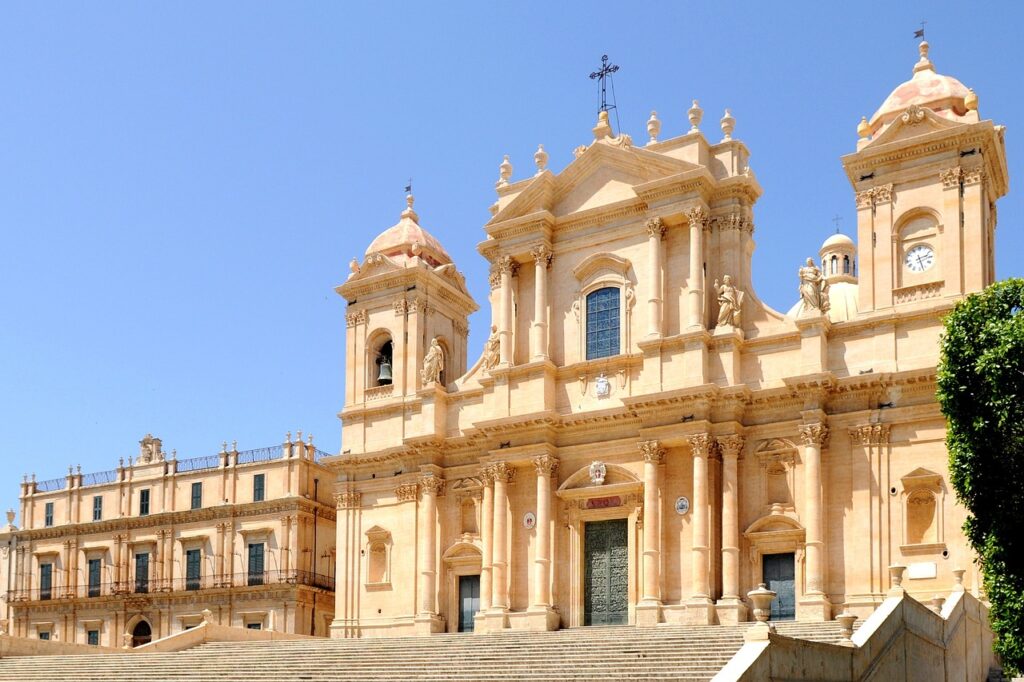
Discover the beauty of baroque architecture in Noto.
Noto is known as the capital of Sicilian baroque, and it earns the title. Begin with the Noto Cathedral, then stroll along Corso Vittorio Emanuele to admire the splendid baroque palazzi and churches. The street is lined with charming cafes where you can stop for an espresso, a gelato or a granita, which is the correct Sicilian answer to a warm morning.
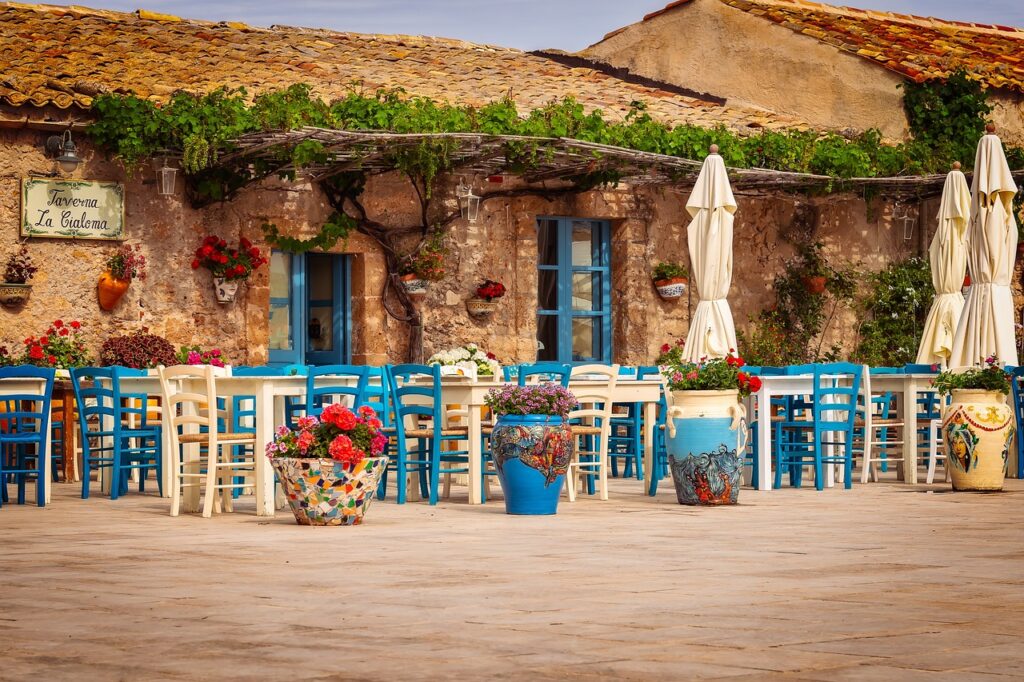
Then take the scenic drive down to Marzamemi, a former tuna-fishing village with a unique blend of Arabic and Mediterranean influences in its architecture and layout. The village was originally established by the Arabs in the tenth century, and much of its charm comes from its preserved, rustic buildings: golden stone houses, colourful window shutters and narrow cobbled streets give it a timeless, romantic atmosphere.
There are plenty of restaurants on Piazza Regina Margherita. We stopped at Taverna La Cialoma, a Michelin Guide restaurant, which did not fail to impress.
After lunch we took the hillside drive to Ragusa, which is divided into two parts set on a steep hill: Ragusa Superiore above and Ragusa Ibla below. Start with Ibla, the more historic half, featuring winding streets, stone houses and baroque architecture. Visit the Cathedral of San Giorgio and relax in the Giardino Ibleo, a garden with sweeping views over the countryside. Take time to explore the artisan shops and grab a traditional Sicilian pastry at a local cafe.
Be cautious about how far down you wander. The hill is genuinely steep — downhill is easy, but coming back up will be a challenge. There is a local bus between the two halves of town if your legs give out, and no shame in using it.
In the evening, savour dinner at one of Ragusa’s highly regarded restaurants and drinks in one of the many bars near the cathedral.
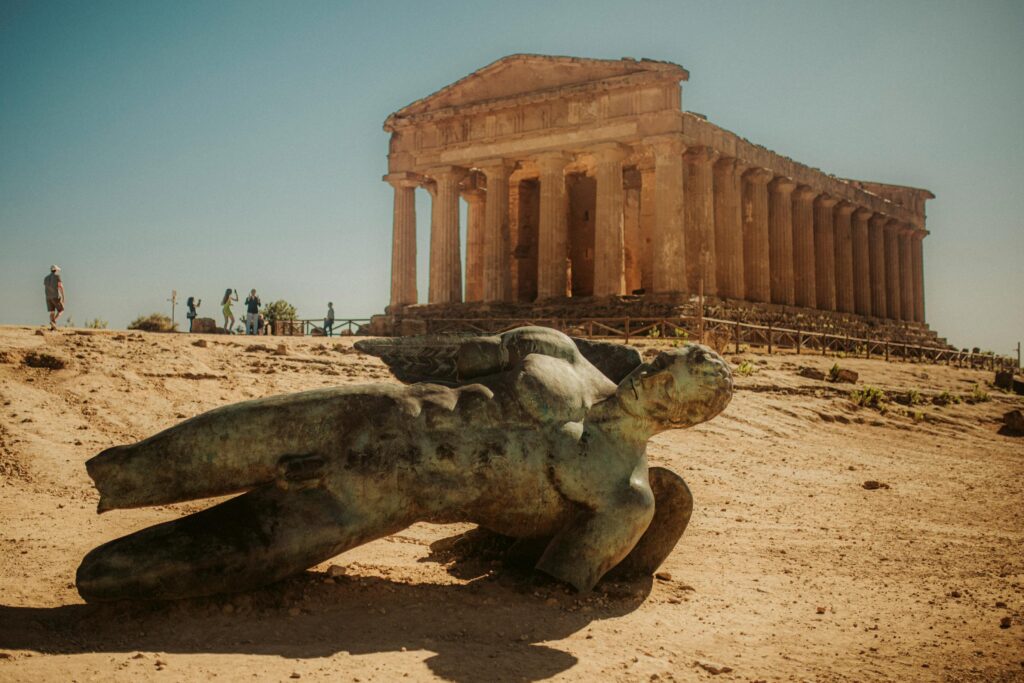
Travel westward to Agrigento, home to one of Sicily’s most impressive archaeological sites.
Drive to Agrigento in the morning and dedicate the whole day to the Valley of the Temples. This UNESCO World Heritage site holds a run of well-preserved Doric Greek temples strung along a ridge, with the Temple of Concordia the standout — it is one of the best-preserved Greek temples anywhere, in better condition than most of what survives in Greece itself. Walk the length of the site among the ruins, and take in the views over the surrounding countryside and out to sea from the high points.
Go early or go late. The ridge is almost entirely unshaded and there is very little cover between the temples, which matters even in October. Water and a hat are not optional.
Afterwards it is a short drive to San Leone on the coast, where there are plenty of seaside hotels for the night. We had a lovely stroll along the seafront in the evening, hopping into a bar or two for a few drinks, before heading over to Pistritto Pizzeria e Bistrot for dinner.
A white cliff, a ceramics town, and Sicily’s wine country.
Leaving San Leone and Agrigento, the first stop heading west is Scala dei Turchi, the Turkish Steps: a cliff of brilliant white marl that drops to the sea in smooth, stepped terraces. It is one of the most photographed places in Sicily and worth the short detour.
Check the access position before you go. The cliff has been under conservation restrictions since Italian prosecutors seized the site in February 2020 following years of complaints about erosion and damage by visitors, and it was vandalised again in January 2022. Walking freely on the white rock is no longer the way this place works. Visitors are directed to the official viewpoint, the belvedere, and the beaches on either side are where you swim. The rules here have changed more than once, so confirm the current position locally rather than relying on an older guide — including this one.
Continue west and break the drive at Sciacca, a coastal town known for its ceramics and its thermal springs. The old town climbs the hillside above a working fishing harbour, and the ceramic workshops along its streets are the best souvenir shopping on this stretch of coast.
From there it is a short run to Menfi, a coastal town known for its vineyards and olive groves. Have a seafood lunch at a beachside restaurant and take a swim if the weather is warm, which in October it usually is.
Spend the afternoon visiting local wineries such as Planeta or Cantine Barbera, where you can taste some of Sicily’s finest wines, including Grillo, Nero d’Avola and Syrah. The wineries here often offer scenic views of the sea, making for an idyllic day in the countryside. Book visits ahead rather than turning up — most are working estates rather than visitor centres, and a tasting is something they arrange rather than something they run continuously.
Suggested addition — the Greek west, the salt pans and a working port.
This is the day we did not do, and the one we would add if we drove the route again. West of Menfi the coast empties out and the Greek ruins get bigger.
Start at Selinunte, a short drive west along the coast: an enormous archaeological park spread over a headland above the sea, with several temples in varying states of collapse and, crucially, a fraction of the visitors at Agrigento. Parts of it you will have largely to yourself.
Carry on to Marsala, the town that gave its name to the fortified wine, where the historic bagli — the old walled wine estates — still run tastings. Just north of the town, the Stagnone lagoon holds the salt pans, with their windmills and shallow, geometric basins. It is one of the best places on the island to be at sunset, and boats run out to the small island of Mozia, a Phoenician settlement in the middle of the lagoon.
Finish in Trapani, a working port with a long, narrow old town on a spit of land and a strong North African streak in its food — fish couscous here is a local dish rather than a novelty. A cable car climbs from the edge of town to Erice, a walled medieval village on the mountain above that spends a good part of the year inside a cloud. Stay the night in Trapani.
Suggested addition — a temple alone in a field, then Sicily’s capital.
Head briefly inland for Segesta, where an unfinished Doric temple stands by itself in open countryside with no other ruins anywhere near it. After the temple-lined ridge at Agrigento it is a completely different experience, and the Greek theatre on the hill above looks out towards the sea.
Then rejoin the coast towards Palermo. Castellammare del Golfo is a good place to break the drive, and the Zingaro nature reserve beyond it has the best coastal walking and the clearest swimming coves on this side of the island if you have the appetite for a detour.
Reach Palermo by the evening and settle into your hotel. It is worth comparing Palermo hotel prices across booking sites before you commit, because rates in the centre swing a long way depending on how close you are to the markets and whether parking is included — which in Palermo is worth more than it sounds.
End your Sicilian road trip in Palermo, a city rich in culture, history and food.
Spend your final day exploring Palermo’s unique blend of cultures. Visit the Palermo Cathedral, then the Norman Palace for the mosaics in the Palatine Chapel — Byzantine, Arab and Norman craftsmanship in a single room, and the best thing to see in the city by some distance. Stroll through the Ballarò Market for local specialities.
Then eat. Palermo’s street food is the best in Italy and this is not really up for debate: arancini, sfincione (the thick, spongy Sicilian pizza), panelle, and cannoli to finish.
Flying home from Palermo rather than doubling back to Catania is what makes this work as a ten-day trip rather than a nine-day one with a long drive bolted on. Sort the one-way car drop-off when you book, not at the desk.
A car is not optional on this route. Some of the coastal towns are linked by rail, but the wineries, Scala dei Turchi, Selinunte and Segesta effectively are not — and the driving between them is a good part of the point.
We drove this route in mid-October and it is hard to improve on. The days were warm and sunny, the sea was still comfortable, and the archaeological sites were busy rather than overwhelming. Expect mild temperatures of roughly 15–25°C, and pack a light layer for the evenings plus something waterproof, because October is when the first real rain of the season tends to arrive.
With its rich history, breathtaking coastline and outstanding food, this ten-day Sicily itinerary covers the island’s highlights from east to west without ever feeling rushed.
Where next? If Sicily has you planning more of Italy, our 10-day Rome, Florence and Venice itinerary covers the classic route north, and Jesolo is the quiet Adriatic beach town to know if you want a few days by the sea near Venice. For more of the Mediterranean there is our Greek island hopping guide, and Matera — Sicily’s spiritual cousin for honey-coloured stone — features in our round-up of underrated European cities.