
This Sicily road trip itinerary is the one we drove in October 2024: ten nights and one hire car, from Catania on the east coast to Palermo in the north-west, taking the long way round along the south coast. Mid-October turned out to be close to ideal — warm, sunny days, a sea that was still comfortable to swim in, and none of the August crowds. Driving it in one direction is also the best way to see how much the island changes as you go: a live volcano and Taormina in the east, honey-coloured baroque towns in the south-east, Greek temples and white cliffs along the south coast, then wine country, the beaches of the far west and Arab-Norman Palermo at the end.
Everything below is first-hand: the six hotels we stayed in, the places we ate and drank, and the photos, which are all our own. Where something is a suggestion rather than something we did, we say so.
Ten nights, one direction, two airports. Pick the car up at Catania and drop it at Palermo, and the trip never doubles back on itself.
| Day | Where | Overnight |
|---|---|---|
| 1 (Wed) | Fly into Catania, drive up the coast towards Etna | Zash, Riposto |
| 2 (Thu) | Taormina, evening in Riposto | Zash, Riposto |
| 3 (Fri) | Coast road south, evening in Ortigia | Syracuse |
| 4 (Sat) | Noto, Marzamemi, Ragusa | Ragusa |
| 5 (Sun) | Agrigento and the Valley of the Temples | San Leone |
| 6 (Mon) | Scala dei Turchi, then wine country | Menfi |
| 7 (Tue) | Marsala, San Vito Lo Capo, Castellammare del Golfo | Palermo |
| 8 (Wed) | Day trip to Cefalù | Palermo |
| 9–10 | Palermo | Palermo |
| 11 | Fly home from Palermo | – |
Fly in, eat well, and get out of the city before dark.
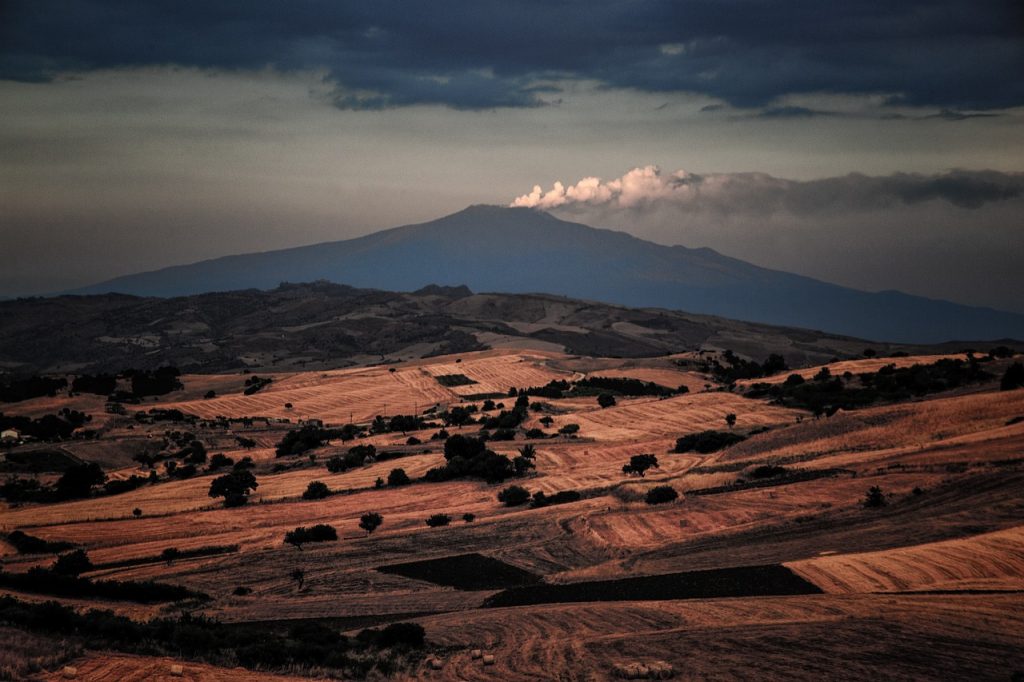
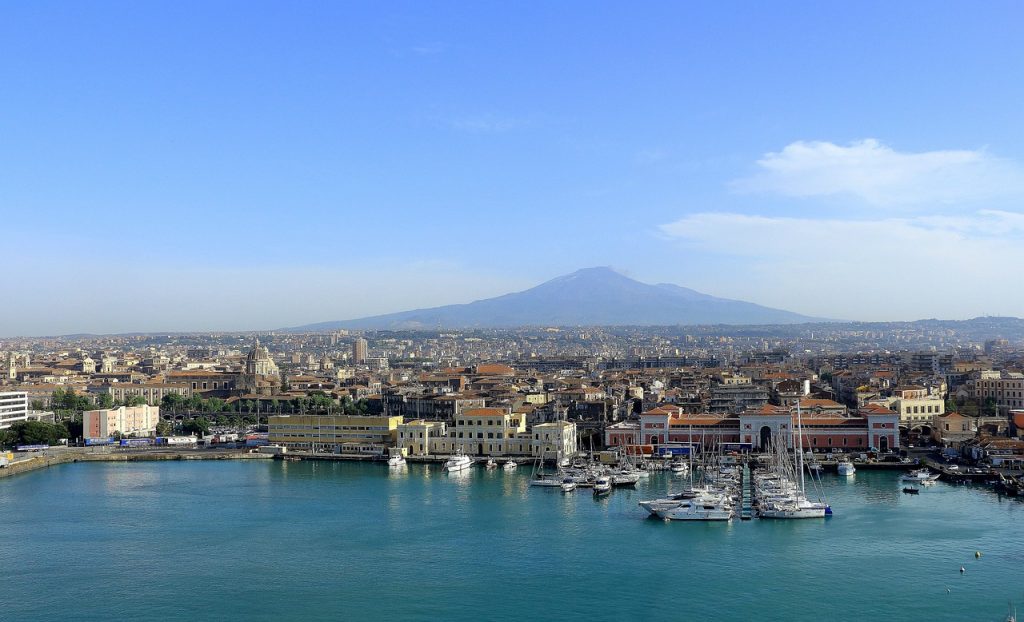
We flew into Catania on Sicily’s east coast. The city is known for its baroque architecture, its markets and its closeness to Mount Etna, Europe’s most active volcano. Before collecting the car, spend a couple of hours in the centre: the Piazza del Duomo and Catania Cathedral are the obvious start, and almost everything around them is built from the black volcanic stone that gives the whole city its colour.
We stopped for lunch at Trattoria La Pigna Verde, a traditional Sicilian restaurant about five minutes’ walk from the cathedral — a cosy spot known for pasta alla Norma and plenty of seafood, and a favourite with locals.
From there it is under an hour’s drive north to Zash Country Boutique Hotel & Spa near Riposto, where we stayed for two nights. It is an amazing property: beautiful grounds among the citrus groves between Etna and the sea, and a restaurant that holds a Michelin star (it is still listed in the 2026 guide). We spent the rest of the afternoon in the grounds, had drinks at the bar and then did the vegetarian tasting menu in the restaurant. The menus are seasonal and firmly Sicilian, and it is well worth booking ahead.
Basing yourself outside Catania for the first two nights is worth the drive. It puts both Etna and Taormina within easy reach, and it means you are not navigating a city centre in a hire car you collected an hour ago.
Sicily’s jewel on the coast, then a night out in a fishing town.
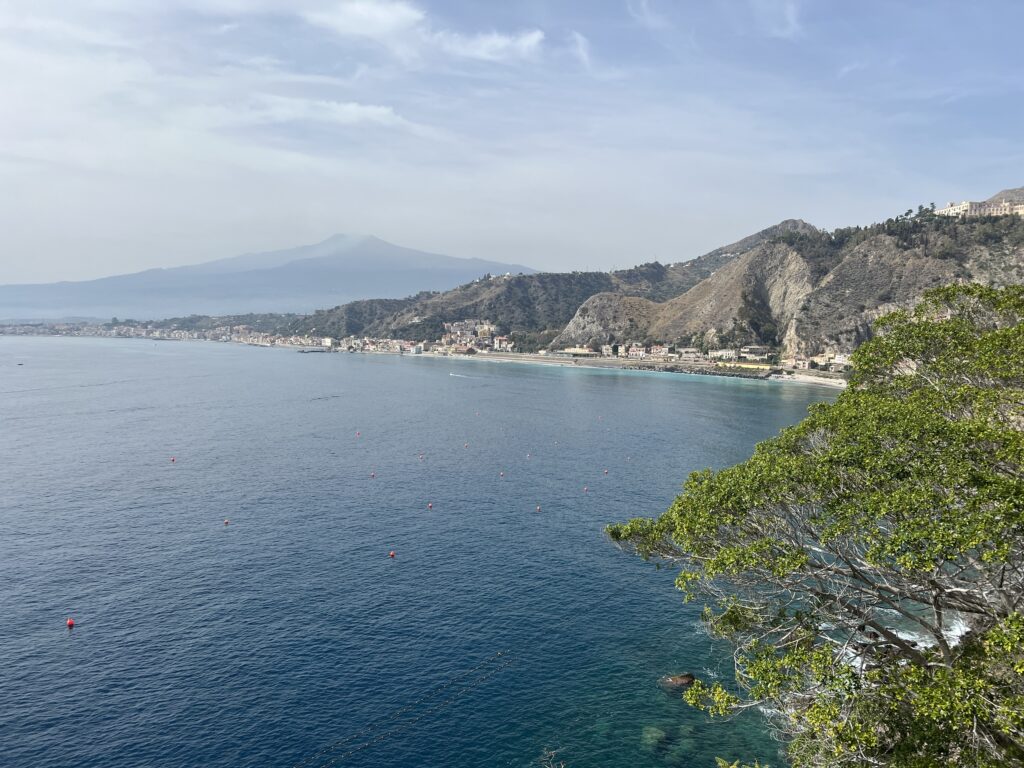
A short drive north brings you to Taormina, a hilltop town known for its views over Mount Etna and the Ionian Sea. The Teatro Antico, the Greek theatre, is the highlight: it frames the volcano and the sea in a single view, which is why it appears on every postcard of Sicily. Afterwards, wander Corso Umberto for the shops and lunch at one of the terrace restaurants.
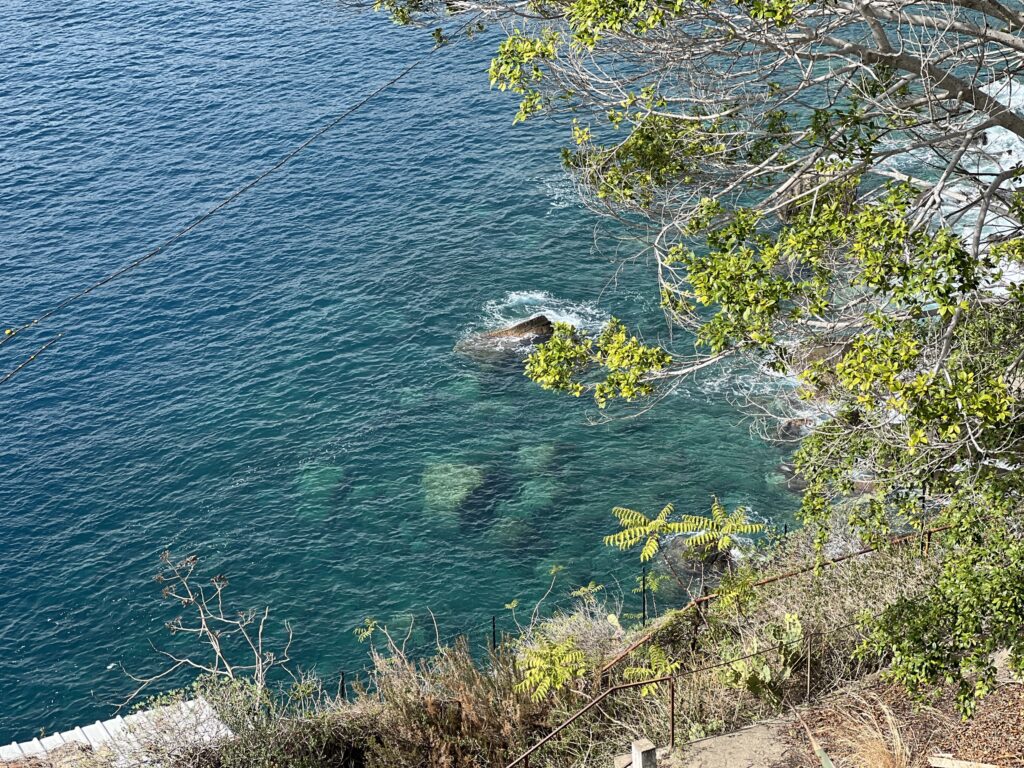
Our experience: the views on the way into town are as good as anything in it. From Via Luigi Pirandello, the road that climbs from the coast, you look straight down into clear turquoise water and across the bay to Giardini Naxos, with Etna sitting behind it.
Below the town, Isola Bella is a tiny island joined to the shore by a narrow sandbar, and the water is still warm enough to swim in October. A cable car runs between Taormina and the beach at Mazzarò if you would rather not tackle the hill on foot — and on the way back up, you would rather not.
In the evening, head into Riposto. It is a laid-back seaside town that comes alive after dark; start with a walk around the marina at sunset, with fishing boats and yachts along the shore and Etna in the distance. We had dinner at Ristorante Pizzeria Al Porticciolo near the marina, went on to Casamatta for creative cocktails and an Aperol Spritz, and finished at Bar Gallego for cannoli, cassata and gelato, plus a range of local liqueurs including limoncello.
Beaches on the way down, and Ortigia after dark.
Check out of Zash and drive south along the coast towards Syracuse. Take your time over it: there are beaches all the way down, and we broke the drive for a swim in the Ionian and a long lunch rather than pushing straight through.
We checked in to Nostos Rooms & Apartments on Corso Umberto, a short walk from the bridge onto Ortigia, the small island that is the historic heart of Syracuse. Ortigia is compact and largely pedestrian, so leave the car and walk in.
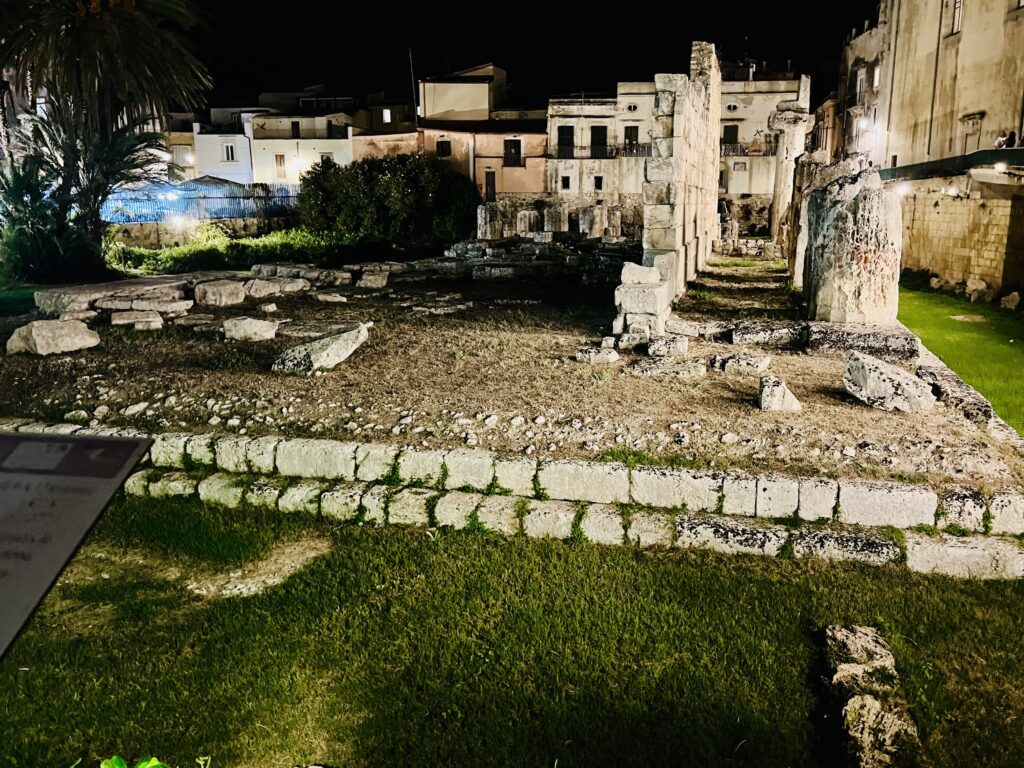
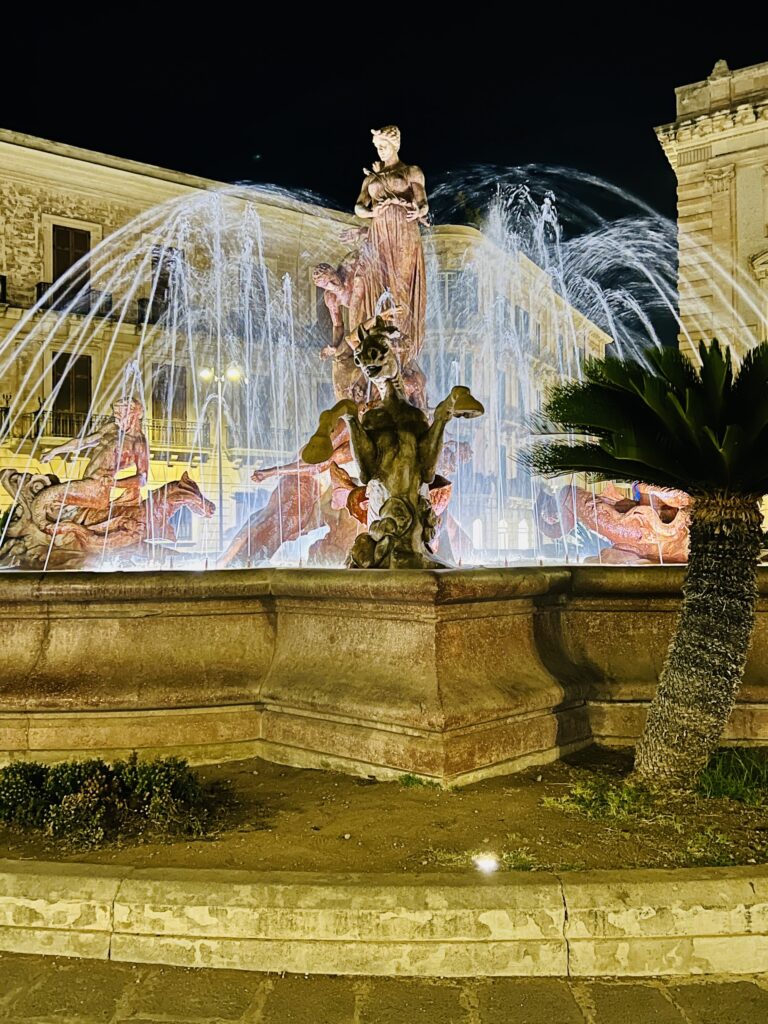
The first thing you reach is the Temple of Apollo, which is floodlit at night and all the more striking for it. Walk on through the evening market and stop at Bar Cristina for a drink overlooking the temple. From there it is a short walk to Piazza Archimede and the Fountain of Diana, lit up after dark, with plenty of restaurants nearby. We ate at MOON — Move Ortigia Out of Normality — a vegan restaurant that is genuinely out of this world and well worth booking ahead.
With an extra morning: the Neapolis Archaeological Park on the mainland side of the city holds the Greek Theatre, the Roman amphitheatre and the Ear of Dionysius, a tall limestone cave with famously strange acoustics. We headed straight on to Noto instead, but it is the best few hours of archaeology on this side of the island.
The capital of Sicilian baroque, a fishing village for lunch, and a town on two hills.
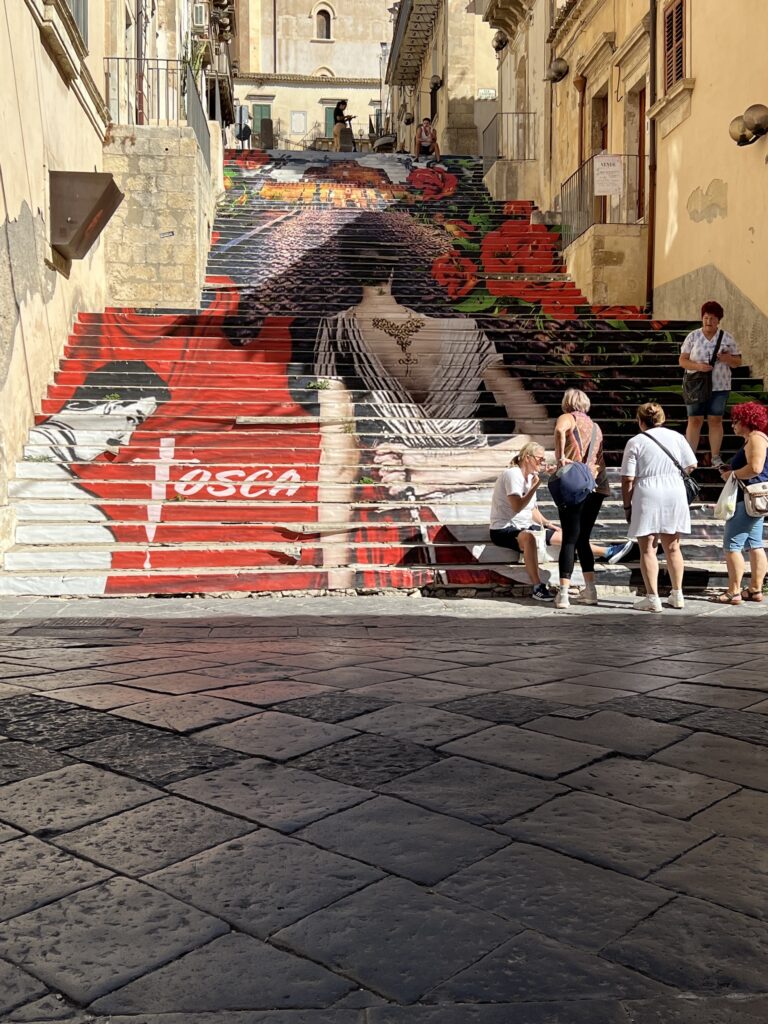
Noto is less than an hour from Syracuse, and arriving mid-morning gave us the town before the day-trip coaches. It is known as the capital of Sicilian baroque, and it earns the title. Walk up from the Porta Reale, the triumphal arch at the end of Corso Vittorio Emanuele, past the palazzi and churches to Noto Cathedral and its grand staircase. Then turn up Via Corrado Nicolaci for the carved balconies, and look out for the painted staircase on Via Mariannina Coffa: when we visited, the steps were painted with a scene from Puccini’s Tosca. The cafes along the Corso are the place for an espresso or a granita, which is the correct Sicilian answer to a warm morning.
Then take the scenic drive down to Marzamemi, a former tuna-fishing village with golden stone houses, colourful shutters and narrow cobbled streets. There are plenty of restaurants on Piazza Regina Margherita; we stopped at Taverna La Cialoma, a Michelin Guide restaurant, which did not fail to impress.
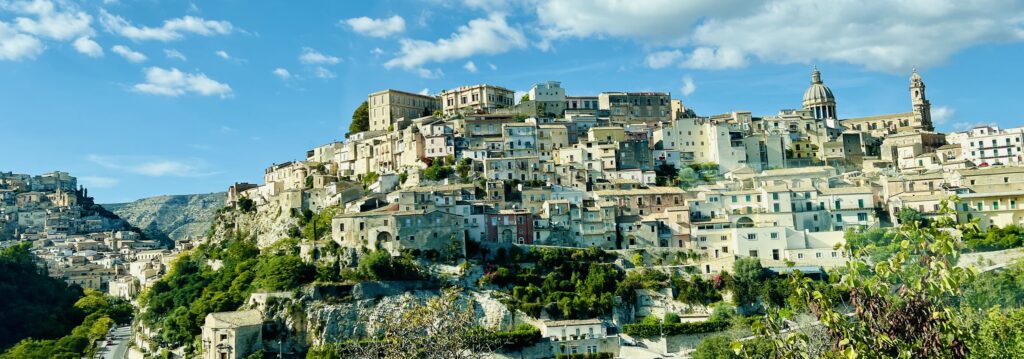
After lunch it is about an hour inland to Ragusa, which is divided into two parts on a steep hill: Ragusa Superiore above and Ragusa Ibla below. The view of Ibla from the road as you arrive is one of the best of the trip. We stayed at Relais Antica Badia – San Maurizio 1619, in Ragusa Superiore just round the corner from the Cattedrale di San Giovanni Battista. Ibla is the more historic half, with winding streets, the Cathedral of San Giorgio and the Giardino Ibleo, a garden with sweeping views over the countryside.
Be careful how far down you wander. The hill is genuinely steep — downhill is easy, but coming back up is a challenge. There is a local bus between the two halves of town if your legs give out, and no shame in using it.
A ridge of Greek temples, then sunset by the sea.
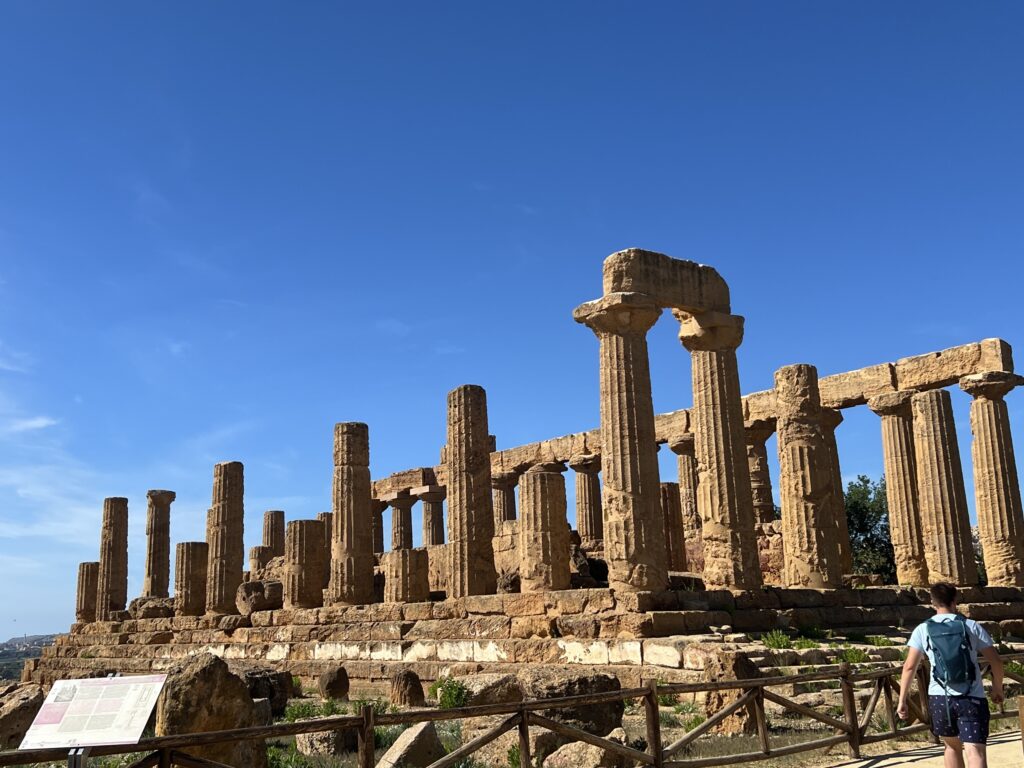
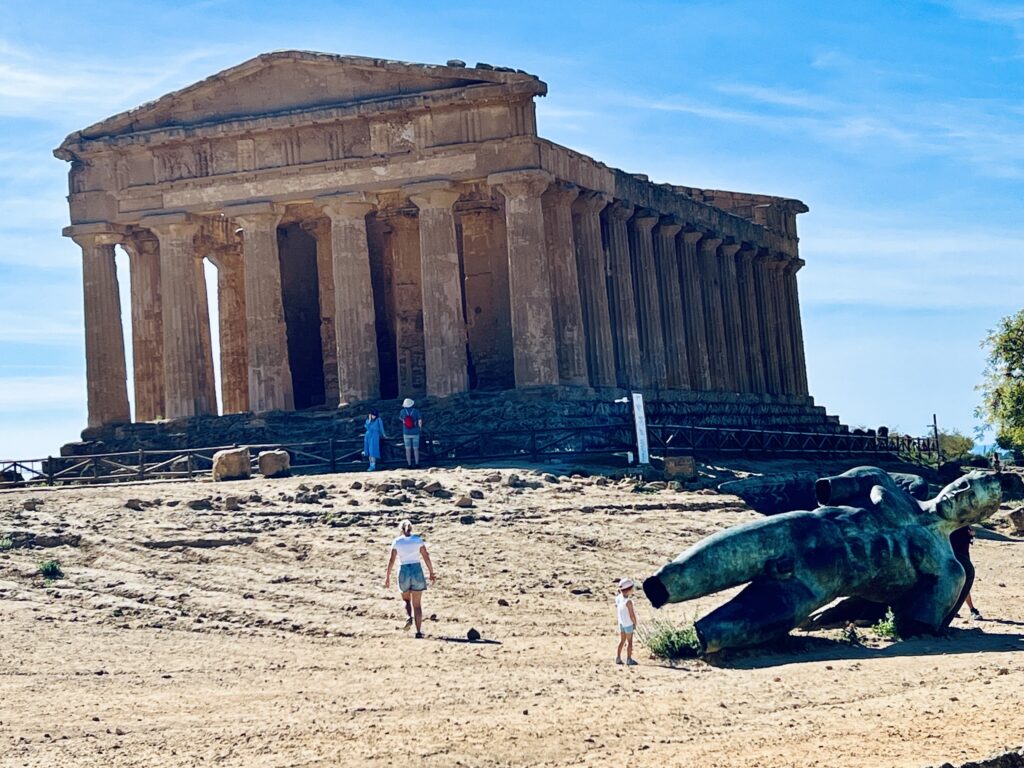
Drive west to Agrigento, home to the Valley of the Temples. This UNESCO World Heritage site holds a run of Doric Greek temples strung along a ridge, with the Temple of Concordia the standout — it is one of the best-preserved Greek temples anywhere, in better condition than most of what survives in Greece itself.
Our experience: we started at the Temple of Juno at the eastern end and walked back along the ridge to Concordia, with views down over the olive groves to the sea on one side and Agrigento on its hill on the other. In front of Concordia lies Icarus, a huge fallen bronze by the sculptor Igor Mitoraj, which makes a surprisingly good companion to a 2,400-year-old temple.
Go early or go late. The ridge is almost entirely unshaded, which matters even in October, so water and a hat are not optional.
Afterwards it is a short drive down to San Leone on the coast, where we stayed at Hotel Costazzurra Museum & Spa. We had a lovely stroll along the seafront, caught the sunset from a beach bar and hopped into a bar or two before dinner at Pistritto Pizzeria e Bistrot.
A white cliff in the morning, a wine estate by the evening.
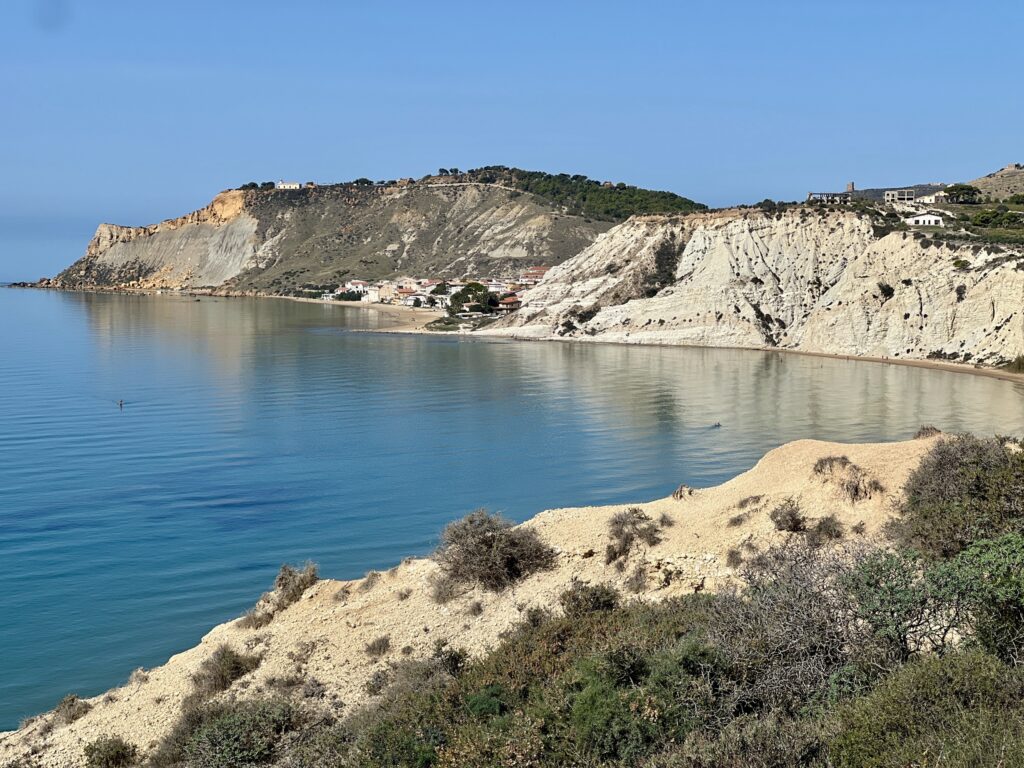
Leaving San Leone, the first stop heading west is Scala dei Turchi, the Turkish Steps: a cliff of brilliant white marl that drops to the sea in smooth, stepped terraces. It is one of the most photographed places in Sicily, and seeing it in person, against water that really is that shade of turquoise, it is easy to see why.
Our experience: we looked at it first from the clifftop on the road above, then walked down to the beach for the view back up at the white rock, and spent the middle of the day by the sea before a last look from the top in the afternoon.
Check the access position before you go. The cliff has been under conservation restrictions since Italian prosecutors seized the site in February 2020 following years of complaints about erosion and damage by visitors, and it was vandalised again in January 2022. Walking freely on the white rock is no longer the way this place works: visitors are directed to the viewpoint and to the beaches on either side. The rules have changed more than once, so confirm the current position locally.
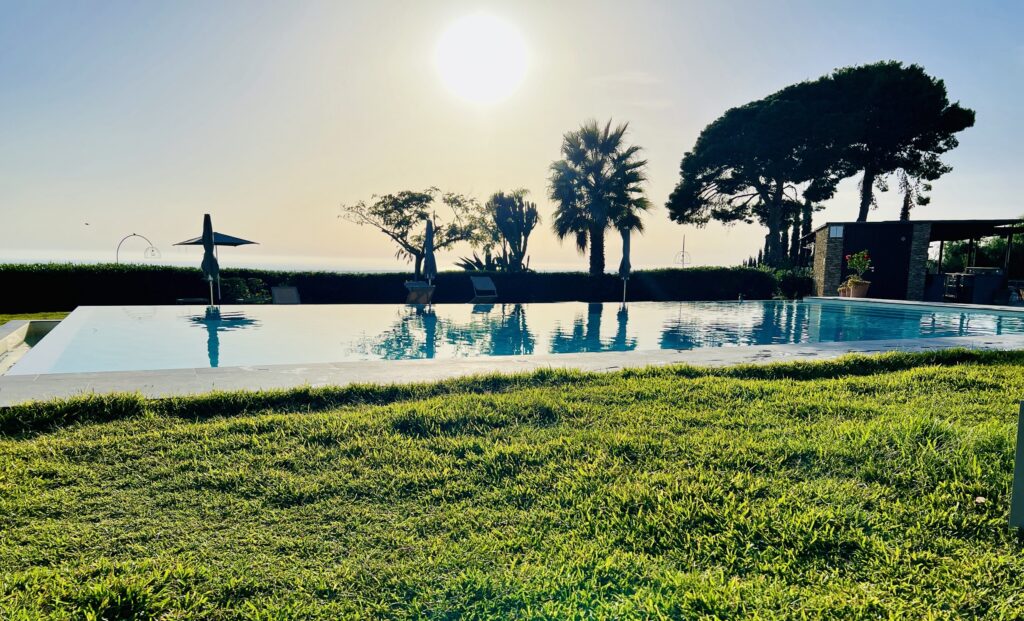
From there it is about an hour west to Menfi, a coastal town surrounded by vineyards and olive groves. We stayed at Masseria del Carboj, a beautiful property on a wine estate with a large swimming pool surrounded by vines. We arrived in time for a glass of white and a glass of red on the terrace, then watched the sun go down over the pool and the lawns.
With more time: Sciacca, on the coast between Agrigento and Menfi, is known for its ceramics and thermal springs, and Menfi’s wineries, such as Planeta, run tastings by appointment. Book those ahead rather than turning up.
The long way to Palermo, round Sicily’s far west.
The direct drive from Menfi to Palermo takes under two hours. We took the long way instead, round the western tip of the island, and made a full day of it.
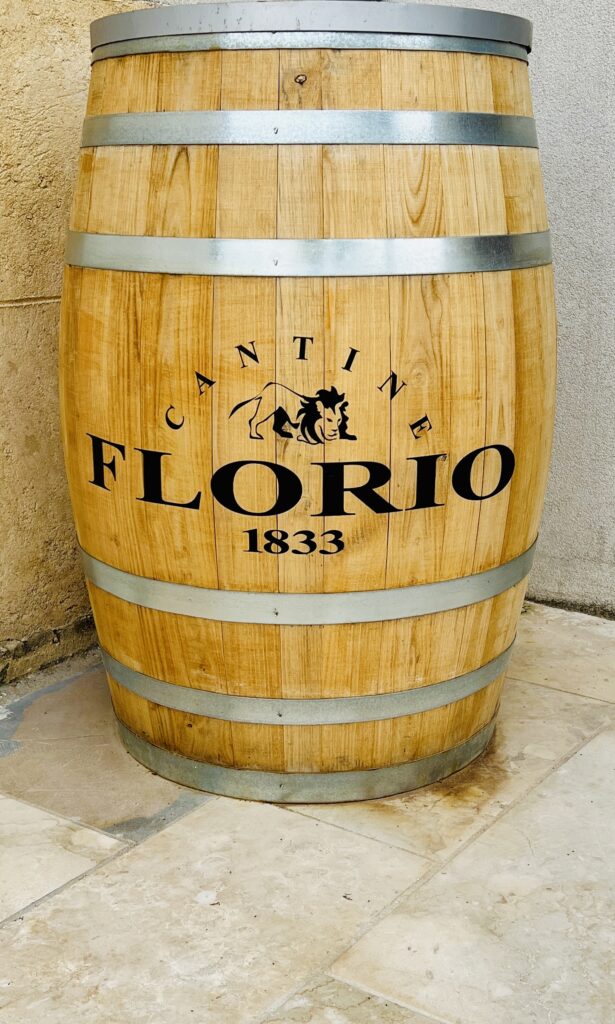
The first stop is Marsala, the town that gave its name to the fortified wine. We called in at Cantine Florio, one of the historic wine houses, founded in 1833. We did not do a tasting — we just bought some Marsala from the wine shop to take home — but Florio does run cellar visits if you book ahead.
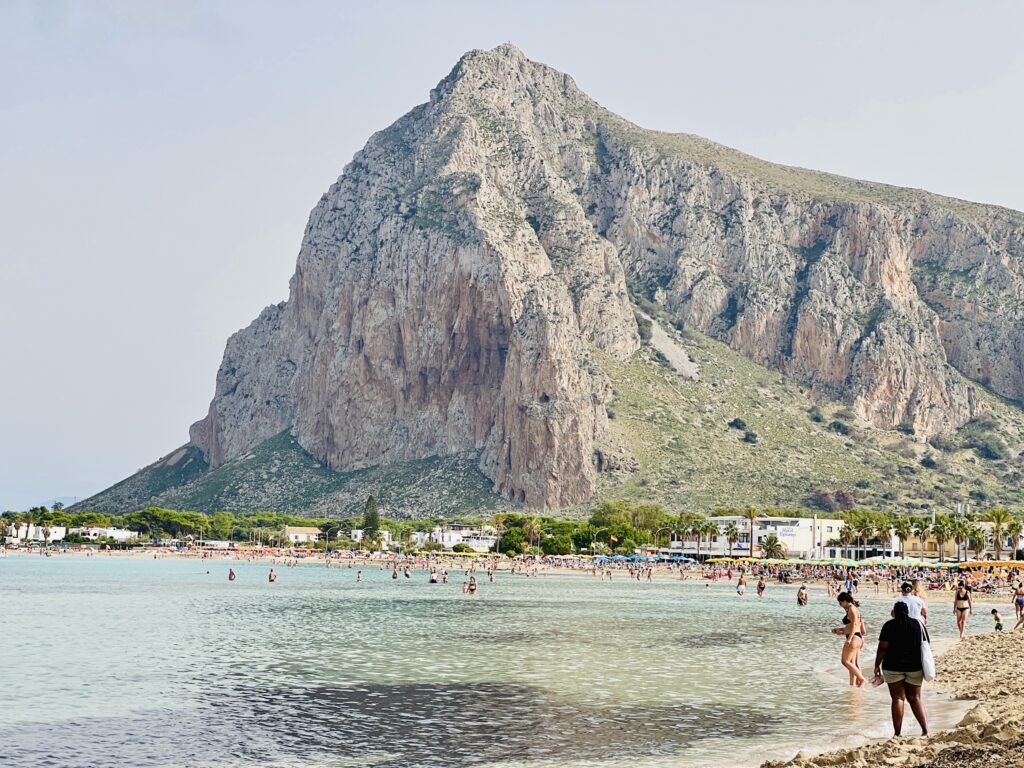
From Marsala, follow the coast north past Trapani to San Vito Lo Capo. On the approach, the mountains drop straight into the sea, and the town itself sits under the cliffs of Monte Monaco, with a small harbour and one of the best beaches in Sicily: a long curve of pale sand and shallow, clear water. We stopped for an hour or so on the sun loungers before carrying on.
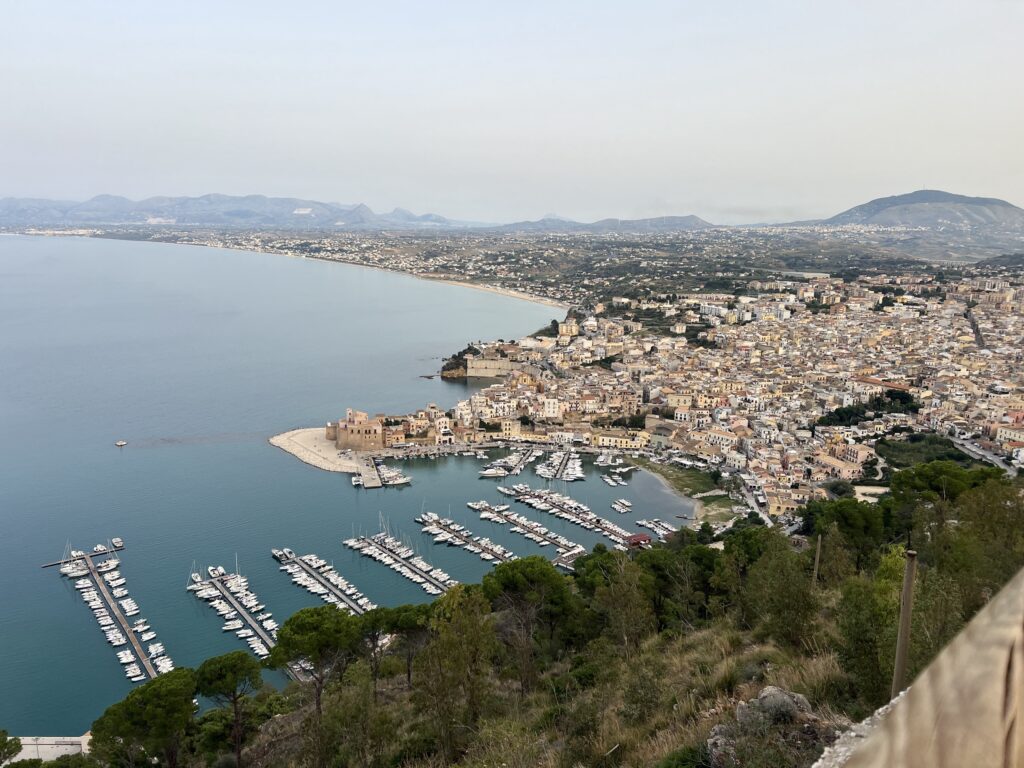
The last stop is Castellammare del Golfo. Pull in at the viewpoint on the road above the town for the view down over the harbour, the old castle on its spit of rock and the whole sweep of the gulf. From there it is about an hour into Palermo.
With an extra day: this stretch can easily fill two. Selinunte, an enormous Greek archaeological park just west of Menfi, the salt pans of the Stagnone lagoon north of Marsala, Trapani’s old town with the cable car up to Erice, the Zingaro nature reserve beyond San Vito and the lone temple at Segesta are all on or near this route. We did not do them this time, but they are first on the list for a return trip.
A beach, an old town and a very big rock.
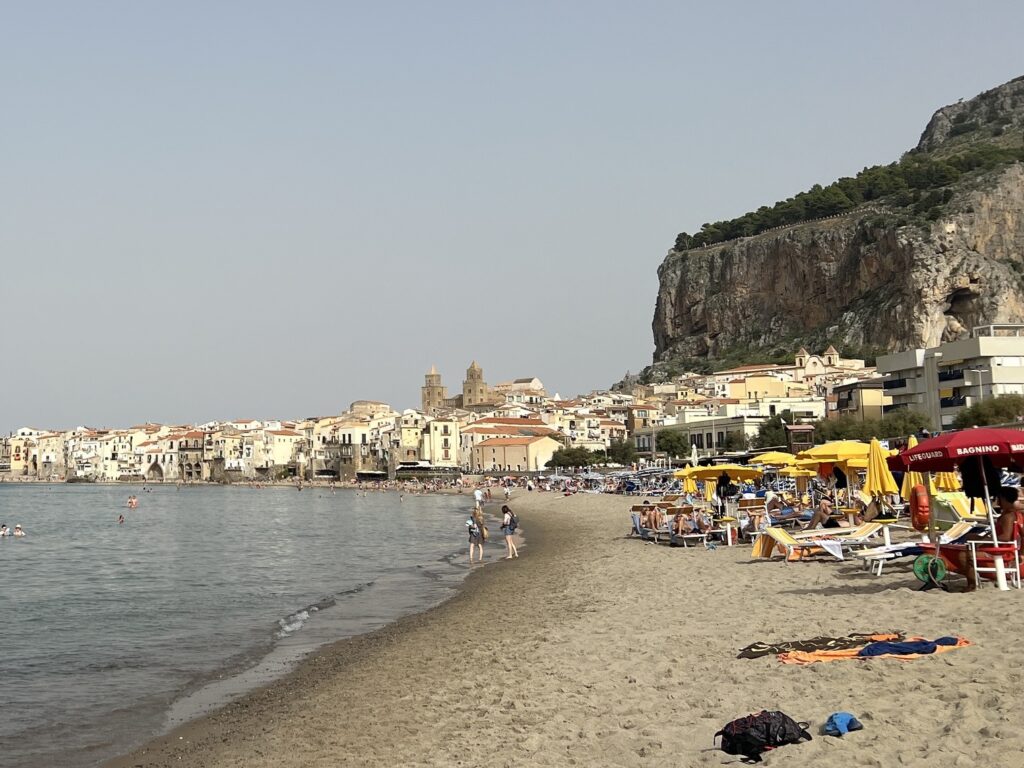
Cefalù is about an hour east of Palermo along the coast, and we drove there for the day. The old town sits on the seafront at the foot of the Rocca, the great headland that towers over it, and the town beach runs right up to the old houses.
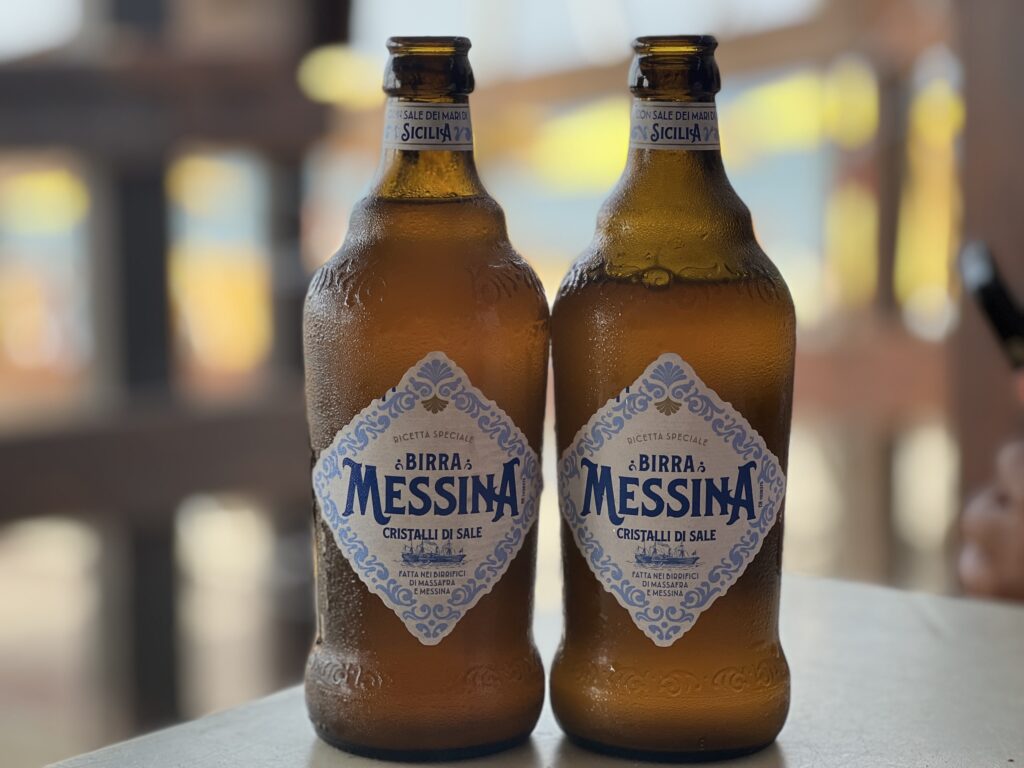
Our experience: we spent the afternoon on the beach and ended it with a couple of cold Birra Messina on the seafront. If you want more than a beach day, the Arab-Norman cathedral is part of the same UNESCO listing as Palermo’s, and the path up the Rocca gives the best view of the town.
Sicily’s capital, on foot.
We stayed at Alma Hotel on Via Mariano Stabile, in the newer part of the centre near the Politeama. It is an easy walk to the old town, and the streets around it are full of bars; our first evening was spent over beers and spritzes on nearby Via Isidoro La Lumia.
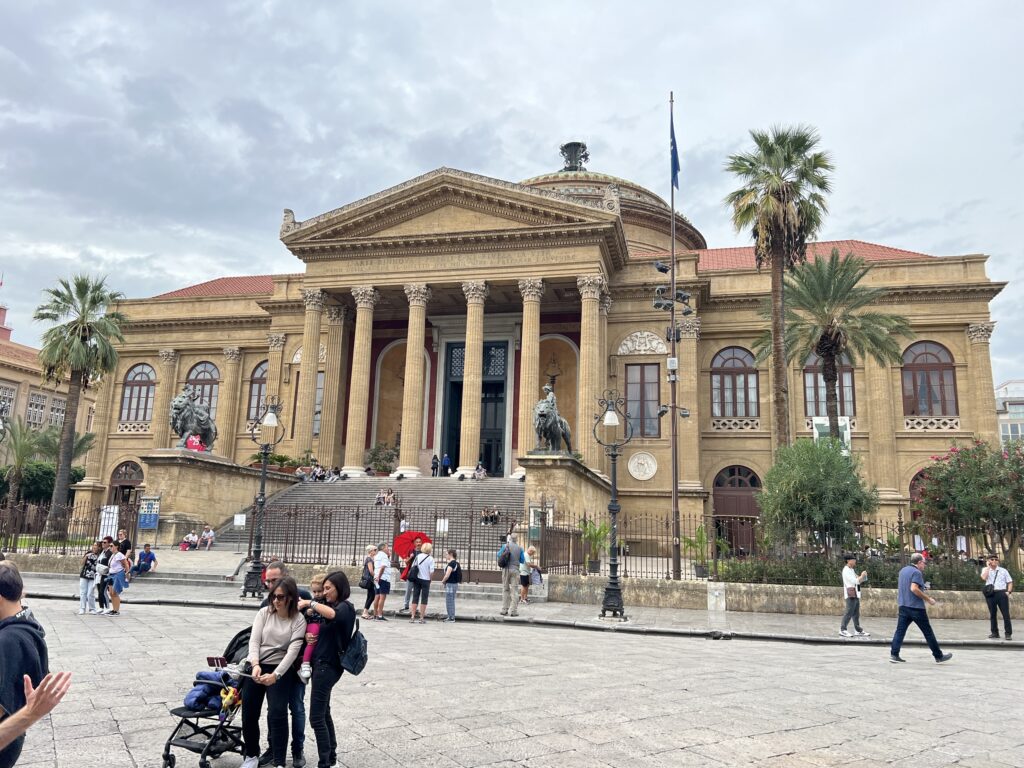
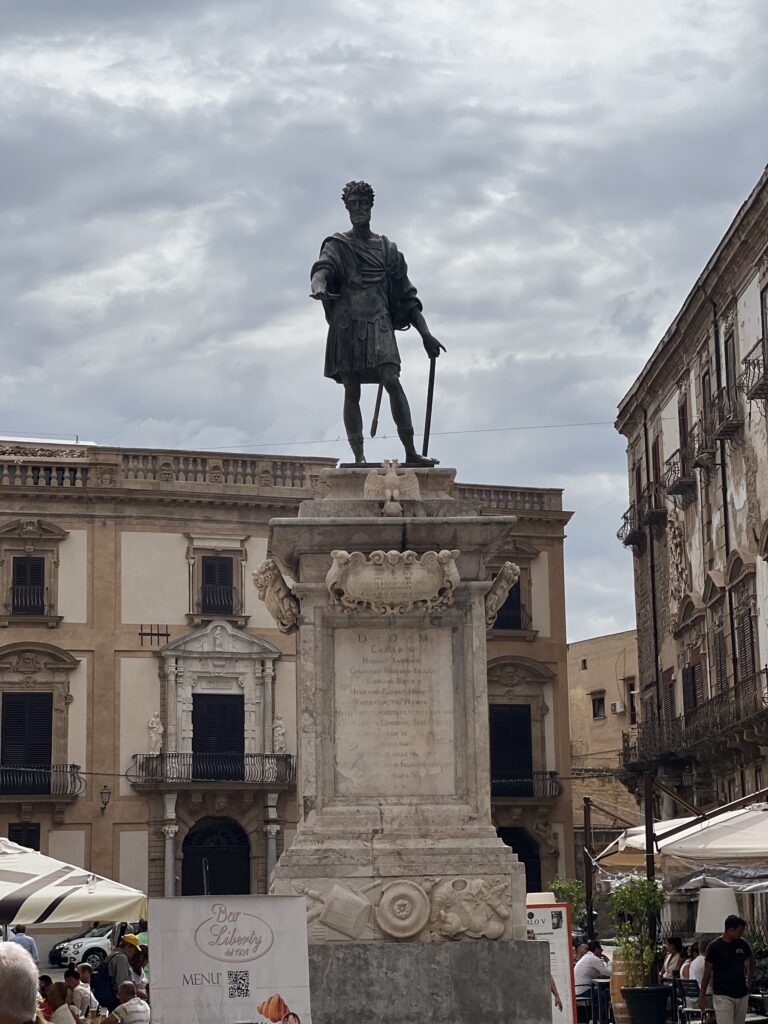
For our full day in the city, we walked from the Teatro Massimo, Italy’s largest opera house, down Via Maqueda to the Quattro Canti and the Fontana Pretoria, past the Martorana’s bell tower, through Piazza Bologni with its statue of Charles V, and on to Palermo Cathedral. It is a compact route, and it takes you through most of the city’s history in a couple of hours.
With more time, the Norman Palace is worth it for the mosaics in the Palatine Chapel — Byzantine, Arab and Norman craftsmanship in a single room — and the Ballarò market is the place for street food: arancini, sfincione (the thick, spongy Sicilian pizza), panelle, and cannoli to finish.
Flying home from Palermo rather than doubling back to Catania is what makes this work as a ten-night trip. Sort the one-way car drop-off when you book, not at the desk.
We would happily recommend all six of the hotels we used: every one was clean, pleasant and well maintained, and the staff were welcoming. Three stood out.
Palermo is where you spend the most nights and where prices vary the most, depending on how close you are to the old town and whether parking is included — which in Palermo is worth more than it sounds. It is worth taking a minute to compare hotel prices in Palermo before you book.
A car is not optional on this route. Some of the coastal towns are linked by rail, but Scala dei Turchi, Marzamemi, San Vito Lo Capo and the country hotels effectively are not — and the driving between them is a good part of the point.
We drove this route from 9 to 19 October 2024 and it is hard to improve on. The days were warm and sunny, the sea was still comfortable, and the archaeological sites were busy rather than overwhelming. Expect temperatures of roughly 15–25°C, and pack a light layer for the evenings plus something waterproof, because October is when the first real rain of the season tends to arrive.
Ten nights was enough to see the island change from one coast to the next without ever feeling rushed. If you can spare an extra night, add it in the west, for Selinunte and Trapani. Highlights, if you are short of time: Noto in the morning light, Scala dei Turchi, the beach at San Vito Lo Capo and an evening wandering Ortigia.
Where next? If Sicily has you planning more of Italy, our 10-day Rome, Florence and Venice itinerary covers the classic route north, and Jesolo is the quiet Adriatic beach town to know if you want a few days by the sea near Venice. For more of the Mediterranean there is our Greek island hopping guide, and Matera — Sicily’s spiritual cousin for honey-coloured stone — features in our round-up of underrated European cities.